Tag: CEA Summit East

Andrew Rose BIO-ISAC

‘It’s Not When, It’s Again’: An Ag-Cybersecurity Pioneer on Getting CEA Operations Ready for the Unthinkable

Andrew Rose has spent nearly a decade trying to convince the agriculture sector that a cyberattack can shut down an operation as fast as an equipment failure—and he’s not optimistic that most operators are there yet. As an advisor at BIO-ISAC and a longtime voice on cyberbiosecurity in food and ag, Rose has watched threats evolve from opportunistic ransomware to targeted corporate espionage aimed at proprietary genetics, automation IP, and production data. In this month’s Indoor Ag-Content Q&A, Rose explains why “secure-by-design” thinking needs to start on day one of any CEA build-out, why untested backups aren’t really backups at all, and why the industry’s next decade of risk may come down to a very old-fashioned question: what happens when the internet doesn’t work? Rose will expand on these themes as a speaker in the session Data Management and Cyber Security in CEA at CEA Summit East this September in Danville, VA.

You started raising cybersecurity awareness in the ag sector back in 2016, well before most people were connecting the words “farming” and “cybercrime.” What did you see back then that made you realize agriculture was an unrecognized target—and how has that threat landscape changed as CEA operations have become more connected and data-driven?

In 2016, I ran a business continuity exercise at a large agricultural lender. A good way to pressure-test an organization is through a realistic crisis exercise. I designed a ransomware scenario that included every “worst-case” element: data exfiltration, encrypted and permanently disabled systems, and a ransom demand. It was enlightening to see the gaps we uncovered in our response plans.

That made me wonder whether the rest of the agricultural sector was equally unprepared. Nearly a decade later, I can confidently say that agriculture is still one of the most under-defended critical industries, and an un-recognized threat by our cyber defenders. Much of my work today remains focused on building basic awareness around cybersecurity threats and counter measures.

An important lesson I learned early on is the importance of secure-by-design thinking. Security shouldn’t be added after a greenhouse is built, a robot is deployed, or software is released, it needs to be high on the list from day one. Every organization should be asking two simple questions: How will we defend our products? and How will we defend ourselves?

Unfortunately, those questions are often overlooked. I’ve had CEOs tell me everything from, “I hadn’t even considered security,” to, “We know it’s an issue, but we’re waiting until our next funding round to address it.” Those responses make me shake my head and feel the blood run a little colder in my veins.

Today’s threat environment extends far beyond ransomware. Corporate espionage is white-hot, with competitors (team on team), organized criminal groups, and even nation-state actors seeking proprietary genetics, automation technologies, production methods, and to pick up a crippled company’s assets for pennies on the dollar. You are a target.

A lot of growers assume cybersecurity is an “IT problem” for banks and retailers, not something that applies to a greenhouse or vertical farm. What’s actually at stake for a CEA operator if their systems are compromised, and why should that risk be top of mind for someone running a growing operation—not just their IT vendor?

For a controlled environment agriculture operation, a cyberattack can directly threaten production. Environmental controls, irrigation systems, lighting schedules, nutrient delivery, climate management, inventory records, food safety documentation, and customer information all depend on connected systems. If those systems become unavailable or are manipulated, entire crops can be lost within hours or days.

For operations with narrow margins, a disruption can fast become a financial crisis. Beyond replacing hardware or recovering data, companies must also rebuild trust with customers, distributors, insurers, and regulators. Without accurate production and traceability records, it may be impossible to move products into the marketplace.

Another consideration is cyber insurance. Many policies now require organizations to demonstrate basic cyber hygiene: multi-factor authentication (MFA), strong password management, network segmentation, regular patching, and secure backups. If those fundamental safeguards weren’t in place, insurance coverage may be reduced or denied.

The organizations that recover most successfully are those that recognize cybersecurity isn’t solely an IT responsibility. Operations, management, communications, legal, and executive leadership all have roles to play. Without a practiced recovery plan, valuable time is often lost assigning blame rather than restoring operations.

Can you tell readers a little about BIO-ISAC and the work you do there? How does the organization approach threat awareness and information-sharing specifically for the bioeconomy, and what does that look like in practice for a food and ag business trying to stay ahead of adversaries?

The BIO-ISAC was founded after recognizing that significant portions of the bioeconomy were being overlooked by traditional cybersecurity efforts. Originally, the term bioeconomy referred primarily to agriculture, forestry, and marine industries. Today, it encompasses the broader life sciences ecosystem, from ag production, biotechnology, pharmaceuticals, diagnostics, and related sectors.

Our mission is to improve the cyberbiosecurity and resilience of organizations that rely on biological systems.

We accomplish this in several ways. We share timely threat intelligence with our members, publish public advisories, provide incident response support, and serve as a trusted safe harbor for responsible vulnerability disclosure. If a researcher or company discovers a cybersecurity vulnerability in a product or system, BIO-ISAC helps coordinate responsible reporting with the appropriate vendors and stakeholders.

In many cases, organizations contact us after experiencing a cyber incident. Occasionally, we identify malicious activity affecting a member before they’re even aware of it. Either way, our goal is to provide practical support, technical expertise, and trusted information-sharing that helps limit damage and improve resilience.

The single best recommendation I give organizations is to rehearse the unthinkable.

Assume you’ve been hacked. Your systems are offline. Production has stopped. Customers are calling. Criminals are demanding payment. Then ask your team: What happens next? Who’s in charge?

Running tabletop exercises with both leadership and operational staff exposes gaps before a real crisis occurs. It builds muscle memory, clarifies decision-making, and significantly reduces the confusion that follows a cyberattack. BIO-ISAC regularly works with agricultural and life science organizations to conduct these exercises because preparedness is one of the most effective forms of cybersecurity.

CEA operators would be wise to review the checklist we provided to Indoor-Ag and hold their vendors accountable. Simple questions like: Does this have a password? and How can I change it? are a good start.

The old saying was, “It’s not if, it’s when.” Today, it’s more accurate to say, “It’s not when, it’s again.” Plan accordingly.

The CEA Summit East session you’ll be part of will touch on “practical strategies” for data management that keep records audit-ready and operations running without interruption. Can you share one habit or safeguard you see too many CEA operators skipping—and what would you tell a grower who wants to get their house in order but doesn’t know where to start?

The most overlooked safeguard is one of the simplest: reliable, tested backups.

Many organizations assume they’re backing up their data, but they’ve never actually verified that those backups can be restored quickly. A backup you can’t recover isn’t really a backup.

Critical operational data should follow the 3-2-1 principle: maintain multiple copies, store them on different types of media, and keep at least one copy offline or otherwise isolated from your primary network. Adversaries frequently target backup systems first because they know organizations are more likely to pay a ransom if recovery isn’t possible.

I also encourage organizations to remember that some information is perfectly acceptable to keep offline. Paper records can’t be hacked, and removable drives that are disconnected from the network provide an important layer of resilience.

Ask yourself a few simple questions:

  • If all of your systems disappeared today, when was your last successful backup?
  • How long would it take to recover your data?
  • How long before production returned to normal?

If you don’t know those answers, that’s where you should start. Make backups routine, automate them whenever possible, and regularly test that you can restore them successfully.

You describe yourself as an agricultural futurist focused on a world for people whose parents haven’t been born yet. As connectivity, automation, and data collection keep expanding in CEA, where do you see the biggest cybersecurity blind spots emerging in the next five to ten years—and what should the industry be doing now to get ahead of them?

The most significant change over the next decade will be the continued expansion of artificial intelligence, both as a defensive tool and as a weapon for cybercriminals.

AI allows attackers to automate reconnaissance, identify vulnerabilities, and launch attacks against thousands of organizations simultaneously. Criminal groups increasingly use AI-powered tools to gain initial access, then sell that access to ransomware operators or other malicious actors.

AI has also dramatically increased the effectiveness of social engineering. Deepfake audio and video have become convincing enough to damage reputations, manipulate employees, and create confusion during a crisis. It’s easy to imagine a future where a fabricated video appears to show a CEA executive admitting contaminated products were shipped or making statements that never occurred. The technical barriers to producing that content continues to fall.

As an agricultural futurist, the further I look, the more analog it gets.

Modern agriculture depends on digital infrastructure that most take for granted: GPS timing, internet connectivity, cloud services, electronic payments, and automated logistics. Those systems work so reliably that we’ve forgotten they’re potential points of failure.

If geopolitical conflict or a major infrastructure disruption were to affect GPS or internet availability, how would a CEA operation continue functioning? Could deliveries still be made? Could employees navigate with paper maps and do they have them? Can you process payments in a non-digital fashion? Could production continue without cloud connectivity? Do you still have manual operating procedures, paper documentation, or legacy equipment that functions independently of the internet? More importantly, does anyone still know how to use them?

It pays to be prepared.

About Andrew Rose

Andrew Rose is an agricultural futurist. He focuses on endeavors which benefit people whose parents haven’t been born yet, on a world as it will be.
He is an advisor at the BIO-ISAC (www.isac.bio), helping to bring cybersecurity (and related threat) awareness/mitigation/response to the bioeconomy with a focus on the agriculture and food sector. He has served as the Chief Strategy Officer in Residence at the Emerging Technologies Centers, the Chair of the Advisory Council for the Maryland Cybersecurity Association, and a judge for the first two years (2019/2020) of the Grow-NY AgInnovation in conjunction with Cornell. Andrew helped found the GIVE Program, a leadership training program in Maryland for rising professionals.

Andrew began a cybersecurity awareness program in 2016 while at a major agricultural bank after recognizing that the ag sector wasn’t getting the attention it needed about the risks posed by cybercriminals and other adversaries. In addition to his experience in cybersecurity, he has a deep understanding of banking/finance, risk management, and other professional service sectors related to food and agriculture.

Andrew is an avid hiker and has summited 35 (of the 56) 14k+ mountains in Colorado.


CEA Summit East Conference Program

CEA Summit East 2026 Unveils Conference Program

Four Deep-Dive Tracks, Greenhouse Sessions and More Set for Sept. 15-16, 2026 In Danville, Virginia

Indoor Ag-Con and the CEA Innovation Center announce the full conference program for the Fifth Annual CEA Summit East, taking place Sept. 15–16, 2026 at the Institute for Advanced Learning & Research (IALR) in Danville, Virginia. The program features four 90-minute deep-dive breakout tracks, keynote addresses, special panel presentations, and the popular CEA Industry & Research Showcase Sessions — with speakers being added to the roster daily.

In a format unique to the Summit, select breakout sessions will be held directly inside the greenhouse of the CEA Innovation Center — putting attendees face-to-face with working research rather than a slide deck. Guided Innovation Center tours cap off the two-day program and are included with every conference pass.

Four Tracks. Twelve Sessions. Real Depth.

Each of the Summit’s four breakout tracks runs across both days, with three 90-minute sessions per track — giving attendees the opportunity to go deep on the topic most relevant to their work. Tracks and sessions are as follows:

TRACK 1: Launching a CEA Operation

• Session 1: Market Research & Defining My Target Market

• Session 2: Building My High Tunnel or Greenhouse: Regulations, Siting and Funding

• Session 3: Starting an Indoor Vertical Farm: Exploring the Models, the Options and What It Really Takes

TRACK 2: Getting Back to Our Roots – Core Horticultural Skills

Held inside the Greenhouse of the CEA Innovation Center

• Session 1: Matching Substrates to Crop & Production System (Soilless & Hydroponic)

• Session 2: Tools For Fertility Management

• Session 3: Lighting Fundamentals: Measurements, Metrics and DLI

TRACK 3: Technology Selection & Data Management

• Session 1: Data Collection & Environmental Monitoring

• Session 2: Data Management & Cybersecurity in CEA

• Session 3: Practical Examples of AI and Automation Integration in CEA Production

TRACK 4: Food Safety & Pest Management

• Session 1: Cleaning & Sanitization Protocols for Food Safety and Plant Health

• Session 2: Insect & Disease Identification in CEA Systems

• Session 3: Building an IPM Plan: Beneficial Insects & Biocontrol Tools

Keynotes, Panels and Showcase Sessions

Keynote addresses on both mornings will set the stage for each day’s programming. Special panel presentations will round out the general session lineup, including a dedicated session on Strengthening the Workforce Ecosystem on Day 1 and a panel focused on What’s Next in CEA Crops – Breeding and Variety Development on Day 2. Keynote speakers will be announced shortly.

The popular CEA Industry & Research Showcase Sessions return across both days — fast-paced, idea-packed presentations from industry innovators and researchers delivering concentrated insight on everything from grower success stories to the latest findings from the field. These sessions are among the most attended and talked-about at the Summit year after year.

The Tour That Everyone Talks About

The guided CEA Innovation Center tour — included with every conference pass — closes out the Summit on the afternoon of Sept. 16. Attendees will explore the research greenhouse, automation systems, and ongoing trials driving the future of controlled environment agriculture. This is not a marketing showcase: it’s a firsthand look at how science and innovation are shaping real-world CEA solutions, led by the researchers and specialists doing the work. Additional tour stops will be announced in the weeks ahead.

Register and Learn More

The full schedule, speaker roster, tabletop exhibits and registration are available at www.ceasummit.com. Speakers are being added regularly; the complete line-up will be announced in the coming weeks. For exhibitor and sponsorship inquiries, contact Suzanne Pruitt at suzanne@indoor.ag or 404.452.1884.

ABOUT CEA SUMMIT EAST

The CEA Summit East is an annual conference bringing greenhouse growers, vertical farm operators, and controlled environment agriculture (CEA) professionals together with researchers, suppliers, and industry leaders. Produced by Indoor Ag-Con and the CEA Innovation Center — a joint project of IALR and the Virginia Tech College of Agriculture and Life Sciences — the summit focuses on the intersection of protected cropping, production science, and emerging technology. Held at the IALR in Danville, Virginia, the event includes keynote presentations, panel discussions, breakout sessions, tabletop exhibits, and guided tours of the CEA Innovation Center’s working research facility. For more information, visit www.ceasummit.com.

ABOUT INDOOR AG-CON

Founded in 2013, Indoor Ag-Con is North America’s largest trade show and conference for greenhouse, controlled environment agriculture and vertical farming. The event covers all crop types and brings together growers, tech providers, researchers, and business leaders to explore trends and innovations shaping the future of food production. For more information, visit www.indoor.ag.

ABOUT THE CEA INNOVATION CENTER

The CEA Innovation Center is primarily housed in Danville, Virginia, on the IALR campus and in Blacksburg, Virginia, on the Virginia Tech main campus. It is a joint project between the Virginia Tech College of Agriculture and Life Sciences and IALR to serve the growing controlled environment agriculture industry. It addresses the needs of the industry with research, education, and extension programs. For more information, visit www.ceaic.org

CEA Summit East 2026 Poster Competition

CEA Summit East Graduate Student Poster Competition Now Open for Abstract Submissions

CEA Summit East is now accepting abstracts for its Annual Graduate Student Research Poster Competition, to be held as part of the Sept. 15–16, 2026, edition at the Institute for Advanced Learning and Research (IALR) Conference Center in Danville, Virginia.

 Now in its fifth year, CEA Summit East brings greenhouse growers, vertical farm operators, and others working in protected cropping together with academia/researchers, suppliers, technologists, and other industry professionals. The summit is co-produced by Indoor Ag-Con, the leading trade show and conference for the greenhouse, CEA, and vertical farming sector, and the CEA Innovation Center, a joint project between IALR and the Virginia Tech College of Agriculture and Life Sciences.

“Graduate student research has always had a place at CEA Summit East, and the Poster Competition is where that shows most clearly — giving emerging researchers a direct opportunity to connect with growers, suppliers, and industry professionals face to face,” said Kaylee South, PhD, Assistant Professor and Extension Specialist, Controlled Environment Agriculture, Virginia Tech. “We encourage graduate students working across any aspect of controlled environment agriculture to submit their abstracts for consideration.”

Competition Eligibility and Guidelines

•      The competition is open to currently enrolled or recently graduated (Spring 2026 or later) graduate students, including M.S., Ph.D., and professional students.

•      Entrants must present posters on original CEA-related research they have conducted.

•      Abstract submissions must be received by July 22, 2026.

•      Each presenter will receive a full conference scholarship pass, including all sessions, keynotes, networking events, meals, and a tour of the CEA Innovation Center.

•      All posters will be judged and scored at the conference. Winners will be announced during the breakfast and keynote session on Day 2, Sept. 16, 2026.

To apply, visit https://indoor.ag/cea-summit-east-2026/poster/. For more information or to answer questions, contact Dr. Kaylee South at kasouth@vt.edu or (706) 491-9315.

ABOUT CEA SUMMIT EAST
The CEA Summit East is an annual conference bringing greenhouse growers, vertical farm operators, and controlled environment agriculture (CEA) professionals together with researchers, suppliers, and industry leaders. Produced by Indoor Ag-Con and the CEA Innovation Center — a joint project of IALR and the Virginia Tech College of Agriculture and Life Sciences — the summit focuses on the intersection of protected cropping, production science, and emerging technology. Held at the IALR Conference Center in Danville, Virginia, the event includes keynote presentations, panel discussions, breakout sessions, tabletop exhibits, and guided tours of the CEA Innovation Center’s working research facility. For more information, visit www.ceasummit.com.

ABOUT INDOOR AG-CON
Founded in 2013, Indoor Ag-Con is North America’s largest trade show and conference for greenhouse, controlled environment agriculture and vertical farming. The event covers all crop types and brings together growers, tech providers, researchers, and business leaders to explore trends and innovations shaping the future of food production. For more information, visit www.indoor.ag.

ABOUT THE CEA INNOVATION CENTER
The CEA Innovation Center is primarily housed in Danville, Virginia, on the IALR campus and in Blacksburg, Virginia, on the Virginia Tech main campus. It is a joint project between the Virginia Tech College of Agriculture and Life Sciences and IALR to serve the growing controlled environment agriculture industry. It addresses the needs of the industry with research, education, and extension programs. For more information, visit www.ceaic.org

Pluck'd in Virginia

Virginia Governor Visits $100 Million Tomato Greenhouse Project in Carroll County

From HortiDaily: 

Last week, Virginia Governor Glenn Youngkin and Secretary of Agriculture and Forestry Matthew Lohr visited the construction site of the 65-acre tomato greenhouse in Carroll County, Virginia. The facility, known as Pluck’d Greenhouse, is currently under development with contributions from Dalsem – Complete Greenhouse Projects, Voorwinden Group, and Kind Farm Services.

“Big win for Southwest Virginia! Pluck’d is investing over $100 million to build its first U.S.-based plant, creating 250 jobs in Carroll County and bringing fresh opportunity to the region”, said Youngkin.

The visit included remarks from the newly appointed Pluck’d CEO Ben Alexander. His background is with Oasthouse Ventures, the UK firm developing the project. “It has been nearly 3 years since moving to the USA for this project and I am delighted with the progress that has been made. Ground up construction started in May 2025, the structure is built, the glass is now on and we will be in stores in March 2026. With special thanks to Oasthouse Ventures Limited Dalsem – Complete Greenhouse Projects, CEAd by Larssen, Mount Rogers Regional Partnership and many others for making this a reality”, he shared.


Read full story from HortiDaily AND We’re thrilled to share that both Secretary Lohr and Ben Alexander, CEO of Pluck’d, will help kick off CEA Summit East with our Opening Morning Keynote: “Cultivating Sustainable Growth: Balancing Economics and the Environment in CEA” on  September 9 | Institute for Advanced Learning & Research, Danville, VA.  Learn more and join us!

CEA Summit East Poster Competition

CEA Summit East 2024 Poster Competition Call For Entries

CEA Summit East 2024 is now accepting abstracts for the Graduate Student Research Poster Competition to be held as part of the October 1-2, 2024, edition at the Institute For Advanced Learning and Research (IALR) Conference Center in Danville, Virginia.

CEA Summit East is focused on bringing together the Controlled Environment Agriculture (CEA) industry and academia. Co-hosted by Indoor Ag-Con, the leading global gathering of the vertical farming | CEA sector, and the Virginia Tech-IALR Controlled Environment Agriculture Innovation Center, a joint project between IALR and Virginia Tech’s School of Plant and Environmental Sciences and Virginia Seafood Agricultural Research and Extension Center, the summit aims to foster collaboration and innovation in the field of CEA.

“Returning for its second year as part of the CEA Summit East, the poster competition is designed to provide graduate students with an opportunity to showcase their high-quality CEA-related research. It also aims to facilitate networking between students and industry professionals,” says Kaylee South, Ph.D., Assistant Professor of CEA at Virginia Tech. “The CEA Summit East Partners are excited to invite graduate students to submit their abstracts for consideration.”

Competition Eligibility and Guidelines:

  • The competition is open to currently enrolled or recently graduated (Spring 2024 or later) graduate students, including M.S., Ph.D., and professional students.
  • Entrants must present posters on original CEA-related research they have conducted.
  • Abstract submissions must be received by August 16, 2024, for consideration.
  • All posters will be judged and scored at the conference, with winners announced during the breakfast gathering/keynote session on day 2, October 2, 2024.

For more information on abstract submission and competition guidelines, please visit https://indoor.ag/cea-summit-poster/ or contact Dr. Kaylee South at kasouth@vt.edu or +1.434.766.6628

ABOUT CEA SUMMIT EAST

Building on the success of its 2023 edition, which attracted attendees from 33 US states, Canada, the Netherlands and Sweden, the 3rd Annual CEA Summit East is set to unite professionals once again from academia, business, and technology within the CEA industry. Attendees include greenhouse growers, urban agriculture operations, vertical farms, outdoor growers seeking hybrid growing opportunities, educators, scientists, extension personnel and agents, suppliers, engineers, tech specialists, architects/developers, government officials, and other industry members. With a focus on facilitating meaningful connections and knowledge exchange, the summit will feature keynote presentations, panel discussions, networking/ breakout sessions, and tabletop exhibits highlighting the latest advancements in CEA technology and practices. Attendees can also look forward to research facility tours, providing firsthand insights into cutting-edge research and development initiatives. For more information, visit www.ceasummit.com

ABOUT INDOOR AG-CON

Founded in 2013, Indoor Ag-Con has emerged as the largest trade show and conference for vertical farming | greenhouse |controlled environment agriculture. Its events are crop-agnostic and touch all sectors of the business, covering produce, legal cannabis | hemp, alternate protein and non-food crops. For more information, visit www.indoor.ag.

ABOUT THE VIRGINIA TECH – IALR CEA INNOVATION CENTER

The Virginia Tech-IALR Controlled Environment Agriculture Innovation Center is a joint project between IALR and Virginia Tech’s School of Plant and Environmental Sciences and the Virginia Seafood Agricultural Research and Extension Center. By developing strategic partnerships with both industry and academia, the goal of the Innovation Center is to conduct research and educational programming to develop, promote and advance the CEA sector in the U.S. and internationally. For more information, visit www.ialr.org/cea

James Eaves

Powering the Future of Agriculture: Exploring the Potential of Digital Electricity in CEA

Q&A With  James Eaves, Indoor Agriculture Director, Voltserver

In an era where innovation and sustainability are paramount in the agricultural industry, one technology is disrupting the way we think about electrical power distribution. VoltServer, the pioneer of Digital Electricity™, is leading the charge with its groundbreaking approach to powering CEA. Indoor Ag-Con talked with VoltServer’s Indoor Agriculture Director James Eaves ahead of September’s CEA Summit East where he will be leading a panel discussion exploring the potential of Class 4 Power—a new power classification specifically tailored for Digital Electricity – in the realm of CEA.  Read on as he demystifies Digital Electricity,  discusses its advantages over traditional power distribution methods, explores real-world implementations, and shares insights into VoltServer’s future plans for advancing this revolutionary technology in the agricultural sector.

Can you explain in simple terms what Digital Electricity (Class 4 Power) is and how it differs from traditional electrical distribution systems?
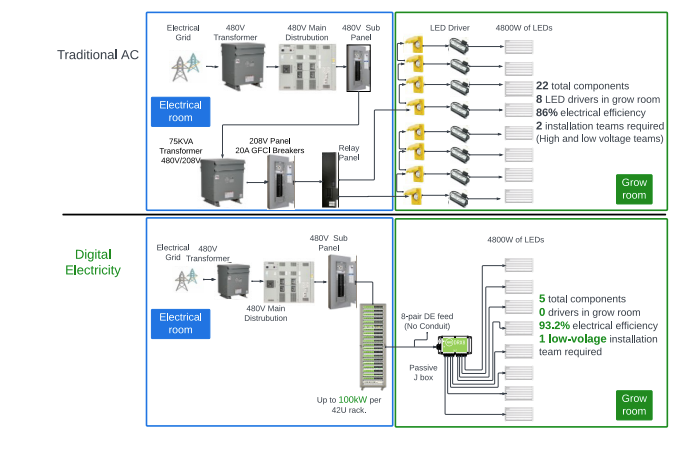
VoltserverDigital Electricity is a new approach to electrical power distribution that uses advanced digital technology. It is based on the concept of transmitting power as high voltage Direct Current (DC) rather than traditional Alternating Current (AC).The main difference between Digital Electricity and traditional electricity is how they are installed and used. Traditional high voltage DC or Alternating Current (AC) requires expensive and time-consuming wiring methods and safety equipment like licensed labor, inspections, permits, and specific devices such as breakers, ground fault protection, and step-down transformers.

On the other hand, Digital Electricity eliminates the need for all those things. It transforms your electrical system from a complicated infrastructure controlled by outside contractors or facility managers into something more like an IT appliance controlled by IT teams. This means that the installation and management of Digital Electricity are simpler and more user-friendly. Digital Electricity has caused a significant disruption in the market.

It has been so groundbreaking that the National Electric Code, which sets safety standards for electrical systems, has introduced a new power classification called “Class 4 Power” specifically for Digital Electricity. This shows how much of an impact Digital Electricity has had on the industry, as it represents the first new power classification in 70 years.

What specific advantages does Digital Electricity offer to CEA operators compared with traditional power distribution methods?

The most common use case is the significant reduction in cost, complexity, and time required to distribute high voltage electricity to horticulture LEDs, fans, pumps, sensors, and irrigation solenoids. For example, Digital Electricity eliminates over 75% of the components required to distribute power to LED, including LED drivers in grow spaces. Moreover, it can be installed in around 1/10th the time.

Digital Electricity also provides growers with unprecedented control and monitoring capabilities. Unlike traditional systems, with Digital Electricity, growers can control, monitor, and schedule each individual LED without installing a second set of wires and equipment. The grower uses software to group LEDs into zones, which can be easily changed as needed. If there is an issue with an LED, the grower receives an instant notification. Other features include the ability to audit power usage for each zone and automatically respond to electricity utilities’ demand response signals, which can create a significant new revenue source for the company.

Can you share a real-world example of how VoltsServer’s Digital Electricity has been implemented in a vertical farm or greenhouse, and the resulting benefits observed by the operator?

Hardee FreshVoltserver, a large CEA company, has successfully implemented Digital Electricity in their operations. They have utilized this innovative power distribution system to power the LEDs in the world’s largest certified organic vertical farm. Recently, they embarked on constructing a new facility in Georgia, spanning approximately 350,000 square feet and capable of producing an impressive 15 million heads of lettuce annually. Both of their facilities rely heavily on adjacent solar farms for power generation.
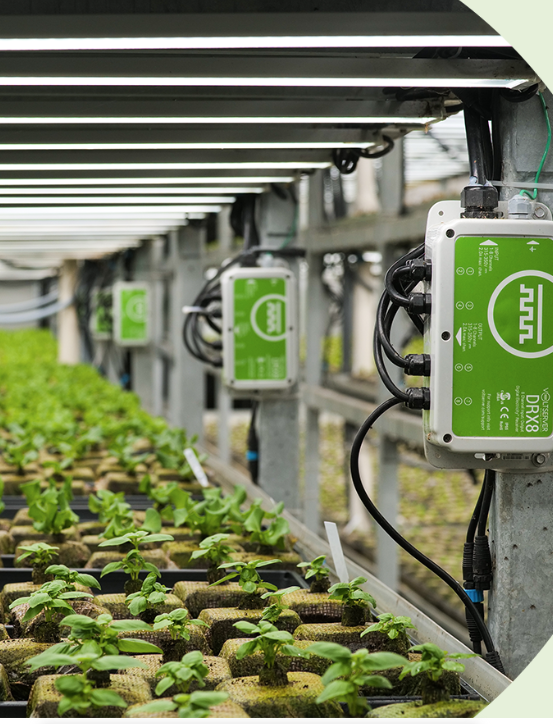
The implementation of a complex and expensive electrical infrastructure would have posed significant challenges. However, thanks to the plug-and-play nature of Digital Electricity, Hardee Fresh was able to swiftly install, maintain, and operate their entire electrical system using their own workforce. This not only saved them a substantial amount of time but also significantly reduced the need for extensive equipment typically required in such projects. This advantage is particularly valuable in the current environment, where there are long lead times for contractors and electrical components like panels and step-down transformers.

In addition to streamlining the deployment process and reducing capital expenditures, Hardee Fresh places great importance on energy efficiency. Digital Electricity has enabled them to enhance energy efficiency through better system design. Moreover, it has provided them with highly precise control and monitoring capabilities over their LEDs, allowing for further cost reduction while maintaining optimal performance.

As the first company to patent and commercialize this innovative technology, what are Voltserver’s plans for future advancements in Digital Electricity and its applications in the agricultural sector?

We are deeply committed to the CEA industry and aim to contribute by making it more financially and environmentally sustainable. Our goal is to power everything in a vertical farm or greenhouse, making the construction and maintenance aspects much easier. After getting CAPEX under control, the promise of CEA will lie in implementing software and connected devices to decrease the cost of producing high-quality food. However, many equipment companies keep their systems closed, hindering innovation in the industry. The intelligence of Digital Electricity presents a unique opportunity to develop powerful software applications, many that we can’t even imagine today. We have intentionally designed our system to be open, allowing anyone to use our open API to develop their own software tools. Currently, we are collaborating with large energy and technology partners to create new software tools that provide growers with even more control over their growing environments and energy usage.

At the upcoming CEA Summit East, you will be leading a panel discussion on Class 4 Power. Can you give our readers a sneak preview of some of the areas you plan to cover during this session?

During the CEA Summit East panel discussion, our goal is to provide the audience with a brief introduction to Class 4 Power, its benefits for the CEA industry, and the potential for Class 4 to become the new standard in CEA design and construction. The panel will include leaders from the electrical construction, LED, and vertical farming industries.

Learn more about Voltserver and the many benefits of Class 4 power by attending CEA Summit East September 19-20, 2023 at the Institute for Advance Learning & Research Conference Center.  Early Bird registration rates are still available!

You can also learn more about Voltserver by visiting the company website here.

Jennifer Waxman Seed2Source

Where Agriculture Meets Wellness: Q&A With Seed2Source Founder Jennifer Waxman

Jennifer Waxman The Villages GrownAfter successfully guiding The Villages Grown™ to its current position as a vertically integrated, 84-acre total footprint, controlled environment agriculture (CEA), year-round, produce growing operation in Central Florida,  Jennifer Waxman is heading back to her roots.  That is, she’s turning her focus back to Seed2Source, the firm she launched in 2005 driven by her “agriculture meets wellness” passion and vision.

Indoor Ag-Con is thrilled to have Jennifer on our Advisory Board, as a speaker at the upcoming CEA Summit East in Virginia next week , and Indoor Ag-Con in Las Vegas in February 2023.  We had the chance to catch up with this busy CEA industry leader to learn more about her vision and plans in this month’s Q&A

For the last 6 years, you’ve overseen the impressive growth and development of The Villages Grown.  Why was the timing right to leave that post to focus on Seed2Source?

We were given the honor and trust to carry out our vision and model for The Villages Grown. This included the strategic direction, design, construction, and operation of a first-of-kind CEA in the South. We backed this with educational programming from both B2C and B2B. We built a community-based brand yet grew enough product for expansion throughout Florida. We worked with beautiful people in a beautiful community.
However, it is no secret that CEA is only scratching the surface in the US. We knew we wanted to be at the head of the ride with its growth. Several players in the CEA sector were showing intrigue and interest in our model. I believe this was rooted in our ability to build a strong brand, educate, all the while supporting other local farmers along the way.

I’ve learned a lot since entering the hydroponics sector in 2000. This is when I started to conceive this model of holistic wellness and was based on my global travels, thus observing the ‘Future of Food’. There is a lot to share from a rather long career in this sector. I have experienced successes, failures, and have observed overall industry needs and voids. This is the exciting part and I wanted back in!

Share more about Seed2Source, your Sustainable Ag Business Consulting Firm focusing on controlled environment agriculture

Seed2Source launched in 2016 but was really an evolution of my first ‘Agriculture Meets Wellness’ firm which was launched in 2005. Seed2Source is a first-of-kind, Sustainable Agriculture & Wellness, consulting firm headquartered in Florida but serving the US (and beyond). The firm focuses on strategic CEA projects rooted in sustainable agricultural, food-as-medicine, and local food system models.
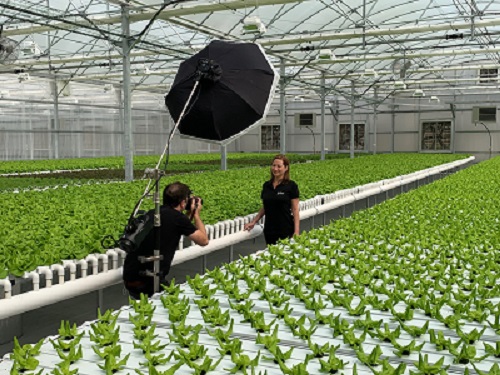
Our CEA experience includes Vertical Farming, Controlled Greenhouse, Aeroponic and Hydroponic Methodologies, Strategy, Branding, Distribution, Education, Innovation, and Science. We are a one-stop-shop and are surrounded by the best and the brightest in all operational units required for true success. We bring in different consultants as the projects deem fit. This allows us to take on both small and large projects as the market dictates.

At the upcoming CEA Summit, you’ll be speaking on 2 panels, including one titled “Building The Future of CEA”.  If there is one message you hope to get across on that panel discussion what is it?

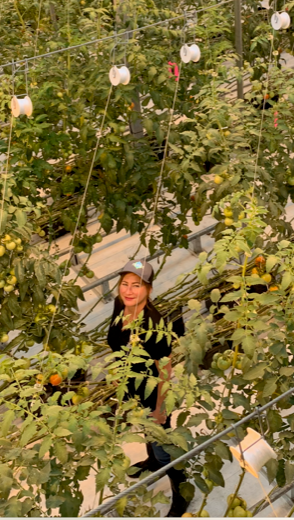
The CEA industry is still at its infancy and shall evolve with continuous iterations and innovations. Typically, when most people think of CEA, they only think of High-Tech, AI, Automation, etc. and forget about the State of Agriculture in general. I hope people start to realize that CEA is ‘part’ of a solution and not the ‘only’ solution. Also, I hope that people don’t forget about the actual agriculturists and horticulturists that are the true heroes in creating a sustainable, profitable, CEA operation. This seems to be lost with many of the current players in CEA.
You’ll also be speaking at the 2023 edition of Indoor Ag-Con on a great session idea you brought to us, “Building A CEA Alliance:  The Power of Grower Partnerships.” Can you share a little more about this idea?

As it stands, there is little-to-no diversity in US CEA. Everyone is clamoring for funding, market share, and innovations in technology. I believe they are missing a huge opportunity for collaborations, strategic partnerships, and supply chain solutions. We must work together not only for larger supply chain opportunities in both retail and wholesale, but to truly exchange best business practices and the like. We should also be collaborating to keep domestic supply in our own backyard and with prominence. There is enough business to be had for all!

What’s next for you and the team at Seed2Source?  

Our vertically integrated CEA Model, of which we pride ourselves on, was clearly not an overnight success. We are still on this journey. This will continue to be the core of our mission and vision. The Vision – ‘Intersecting Agriculture with Wellness as a Food-As-Medicine Approach’ — will continue to drive our passion and expansion.

We feel strongly that this is the model for success and ultimate operational sustainability. We are being courted by some amazing operations – both new and old players in the CEA space – which has been rewarding. We will continue to build our CEA and overall Domestic Farm Partnerships and Educational Programming.

Learn more about Jennifer and her team at www.seed2source.com 

Roger Buelow CTO

AeroFarms CTO Roger Buelow To Kick Off CEA Summit East With Opening Morning Keynote Address

DANVILLE, VA (SEPTEMBER 19, 2022) AeroFarms Chief Technology Officer Roger Buelow will lead the opening morning keynote address for the inaugural edition of the CEA Summit East, October 25-26, 2022.  Indoor Ag-Con and the Controlled Environment Agriculture (CEA) Innovation Center– a joint project of the School of Plant and Environmental Sciences at Virginia Tech, Virginia Seafood Agricultural Research and Extension Center at Virginia Tech, and the Institute for Advanced Learning and Research (IALR) – have partnered to co-host the new event at the IALR Institute Conference Center in Danville, VA.

This announcement follows on the heels of the grand opening of AeroFarms Danville, the world’s largest aeroponic smart farm, capable of growing more than 3 million pounds of fresh leafy greens annually to meet increased consumer demand.

During his address on Tuesday morning, October 25, 2022 at 8:45 am, Buelow will share more about the new Danville farm and how it utilizes AeroFarms proprietary indoor vertical farming technology to grow more plants at the highest productivity per square foot with the least amount of natural resources – continuing AeroFarms legacy of continuous improvement and innovation.  In addition to the environmental benefits, Buelow will discuss benefits the farm brings to the Southern Virginia region ranging from job creation and year-round access to safe, fresh greens to hands-free farming with end-to-end automation from seeding to growing to harvest to packing.

In addition, he will also share updates on some of the exciting plant research and workforce development projects he and his team are working on with Virginia Tech, the IALR and the CEA Innovation Center.

As CTO, Roger Buelow leads the innovation and capabilities team for AeroFarms and works closely with R&D and Business Development. He is an LED innovator and engineering technologist with over 20 years of experience in government and the private sector. Roger previously served as CTO of Energy Focus (a publicly traded company) for ten years leading their R&D, Engineering, and Operations to refit the U.S. Navy with LEDs, develop lights that leverage blue light to help regulate sleep cycles, and to set the world’s record for most efficient solar cell.

Roger worked with AeroFarms in 2009 to help with lamp and fixture design, and he brings his extensive network and industry expertise with LEDs. He has been the principal investigator on over a dozen federally funded research contracts spanning military and civilian technologies and holds over 20 patents covering a wide array of technologies. Roger has brought over 50 products from concept, through R&D, into engineering, and then onto the open market. Roger has a B.S. in Mathematics and an M.S. in Systems and Control Engineering from Case Western Reserve University, Cleveland, Ohio.

Learn more about this exciting keynote session and the full conference program here.

“Roger Buelow’s extensive experience and keen industry insights, coupled with the AeroFarms Danville-Pittsylvania story, come together to create the perfect program to kick off the new CEA Summit,” says Dr. Michael Evans, Director of the School of Plant and Environmental Sciences at Virginia Tech and Associate Director of the CEA Innovation Center. “We are thrilled to have Roger join the keynote stage and know our audience will be eager to hear from him.”

The new CEA Summit East is custom-tailored for new and well-seasoned CEA industry members from throughout the Eastern US, including indoor and greenhouse growers, facility owners and operators, educators, government officials, real estate developers, architects, construction specialists, sales and marketing teams and others.

During the one and one-half day event, industry members will have the opportunity to attend the conference featuring CEA thought leaders, researchers and experts leading keynotes, panels, and breakout sessions; explore tabletop exhibits presenting the latest CEA innovations and services; and enjoy a host of networking opportunities ranging from meals and coffee breaks to an evening social event.

Registration is now open for the event and attendees can save with discounted Early Bird rates when they register before October 7, 2022.  Learn more at www.ceasummit.com

QUICK FACTS:
WHEN:                 Tuesday, October 25 – Wednesday, October 26, 2022
WHERE:              
IALR Institute Conference Center, 150 Slayton Ave, Danville, VA 24540
INFO:                    For information on exhibiting or attending visit www.ceasummit.com 

ABOUT INDOOR AG-CON
Founded in 2013, Indoor Ag-Con has emerged as the premier trade event for indoor | vertical farming | controlled environment agriculture, the practice of growing crops in indoor systems, using hydroponic, aquaponic and aeroponic techniques. Its events are crop-agnostic and touch all sectors of the business, covering produce, legal cannabis |hemp, alternate protein and non-food crops. More information – www.indoor.ag | 404.991.5186

ABOUT THE SCHOOL OF PLANT AND ENVIRONMENTAL SCIENCES AT VIRGINIA TECH
The School of Plant and Environmental Sciences at Virginia Tech trains the next generation of professionals in the fields of plant breeding and genetics, agronomic and horticultural crop production, plant protection, soil and water systems management, agricultural technologies, environmental restoration and agro-environmental stewardship.  It conducts research to improve agricultural productivity, reduce negative impacts on the environment and improve soil and water health.  Through extension programs, it provides science-based information to stakeholders to help them feed the world while protecting the environment.  More information —www.spes.vt.edu  

ABOUT THE VIRGINIA SEAFOOD AGRICULTURAL RESEARCH AND EXTENSION CENTER AT VIRGINIA TECH
The Virginia Seafood Agricultural Research and Extension Center at Virginia Tech works to support the future of the historic seafood industry — in Virginia and beyond. Its extension specialists work with industry and research partners to identify and respond to emerging needs and provide technical guidance to stakeholders in every level of the seafood supply chain. Through technical assistance, training, process validation, value-added product development, and more, it helps stakeholders ensure product quality, safety, and viability. More information — www.arec.vaes.vt.edu

ABOUT IALR
The Institute for Advanced Learning and Research (IALR) serves as a regional catalyst for economic transformation. Core focus areas include research that provides a clear path to commercialization, advanced learning opportunities where education meets experience, training and rapid-launch space for advanced manufacturers, and economic development through conferencing and a partnership with the Southern Virginia Regional Alliance. It is located in scenic and historic Danville-Pittsylvania County on the VA/NC state line, within a short drive of Roanoke, Greensboro and Raleigh.  More information –  www.ialr.org 

ABOUT AEROFARMS
Since 2004, AeroFarms has been leading the way for indoor vertical farming and championing transformational innovation for agriculture. On a mission to grow the best plants possible for the betterment of humanity, AeroFarms is a Certified B Corporation with global headquarters in Newark, New Jersey. Named one of the World’s Most Innovative Companies by Fast Company two years in a row and one of TIME’s Best Inventions in Food, AeroFarms patented, award-winning indoor vertical farming technology provides the perfect conditions for healthy plants to thrive, taking agriculture to a new level of precision, food safety, and productivity while using up to 95% less water and no pesticides ever versus traditional field farming. AeroFarms enables local production to safely grow all year round, using vertical farming for elevated flavor.™ Its products can be found at major selling partners like Ahold Delhaize, Amazon Fresh, Baldor Specialty Food, Compass Group, Harris Teeter, Marcus BP, Momofuku Noodle Bars, ShopRite, The Fresh Market, Walmart, and Whole Foods Market. In addition, through its proprietary growing technology platform, AeroFarms has grown over 550 varieties of plants and has developed multi-year strategic partnerships ranging from government to major Fortune 500 companies to help uniquely solve agriculture supply chain needs. More information – www.aerofarms.com


###