
Tag: Container Farms

Indoor Ag-Conversations

Beyond the Box: The Realities of Container Farming in 2025

The recent Indoor Ag-Conversations  panel brought together four seasoned voices from the container farming world. The session was moderated by Grant Anderson of Better Fresh Farms, a container farm operator, and featured three manufacturers as panelists: Matt Daniels (AmplifiedAg®), Glenn Behrman (CEA Advisors LLC), and Tripp Williamson (Vertical Crop Consultants).

Their goal? To offer a clear-eyed look at what’s working, what’s not, and where the industry goes from here.

What followed was one of the most honest, detailed discussions the container farming sector has seen in some time.


Is Container Farming Still Viable?

The consensus: Yes, but only if expectations are reset.

As Matt Daniels noted, “It’s still viable, just not in the way we all thought it would be.” Most panelists agreed that early marketing painted an overly rosy picture, luring operators with promises of easy ROI and plug-and-play farming. That pitch didn’t match reality. Now, the model is evolving into something more grounded and focused: smaller, local, specialty-driven, and built with a deep understanding of both market and margins.

As Grant Anderson shared from personal experience, “We’ve all felt the sting of overpromised systems that didn’t deliver. But if your market can consistently consume what you grow, container farms can absolutely work.”


Indoor Ag-Conversations: The State & Future of Container FarmingWhy Do So Many Fail?

The panel didn’t hold back: false promises, poor support, and a fundamental misunderstanding of what it takes to farm were cited repeatedly.

Glenn Behrman offered a blunt assessment: “Container farming isn’t for everyone, and it was sold like it was. The Freight Farms model led people to believe it was a tech play with automatic profits. That did serious harm.”

Panelists emphasized that running a container farm is more than a side hustle. It takes entrepreneurial grit, an appetite for learning, and a willingness to work through the inevitable failures. The most successful operators, they agreed, aren’t necessarily those with ag backgrounds, but they are relentless learners and problem-solvers.


Who Should Be a Container Farmer?

Tripp put it simply: “People with a teaspoon of passion and a gallon of grit.”

The ideal operator, according to the panel, blends curiosity, resilience, and humility. You don’t have to be an agronomist, but you do have to be ready to show up every day, learn from failure, and adapt quickly.

Matt Daniels added that transparency is key: “We don’t just drop off a farm and wish you luck. We walk growers through multiple grow cycles because support is everything.”


Real ROI: Hope or Hype?

When asked about return on investment, every panelist pushed back on the idea of quick payback. There is no one-size-fits-all ROI in container farming. Power rates, market access, and product quality all play a role.

“You’ve got to move 85 to 95 percent of your product, every week, all year, to stay ahead,” Anderson said. “You can’t just copy a spreadsheet and expect it to work.”


What’s Actually Working in 2025?

Mushrooms, microgreens, and specialty crops like edible flowers came up repeatedly as strong plays.

These products tend to have better margins, faster cycles, and more niche demand, especially in foodservice. As Williamson explained, “You’ve got to get good at a few things. Don’t try to grow everything for everyone.”

Daniels echoed that, encouraging farmers to dial in a repeatable process before chasing new crop types.


Navigating the Freight Farms Fallout

With Freight Farms filing for bankruptcy, many operators are left in limbo. The panelists addressed this directly.

Both AmplifiedAg and Vertical Crop Consultants are working on retrofit kits to help stranded growers keep their systems operational. Daniels noted their goal is to provide “lightweight, low-cost” upgrades that restore functionality without requiring a full rebuild.

Behrman added that the crisis should be a reset moment for the industry. “It’s a chance to raise the standard. Honest, trustworthy systems. Realistic pricing. No more smoke and mirrors.”

Final Advice for New Entrants

  • Go slow. Do your homework and don’t rush the purchase process.
  • Know your market. Don’t build until you know who you’re selling to.
  • Volunteer first. Get hands-on experience before investing.
  • Keep it simple. Avoid overengineered systems with too many failure points.
  • Stay focused. Nail three or four products before expanding your offerings.

Anderson wrapped up the panel with a simple takeaway: “The container is just a tool. Your business model, your support system, and your discipline will determine your success.”


About Kyle Barnett
Kyle BarnettWith over a decade of experience in Controlled Environment Agriculture, Kyle Barnett has built a career at the intersection of hands-on production, strategic sales, and industry leadership. From early roles as a grower to closing multimillion-dollar deals and advising leading suppliers, his work has consistently been driven by results and grounded in integrity. He leads panel development for Indoor Ag-Con, produces and hosts the CropTalk podcast (launched in 2019 and now with over 250 episodes), and consults with some of the most forward-thinking companies in the space. His approach is rooted in facts, offering clear insights, honest conversations, and practical strategies that help businesses grow. Learn more at www.kbcea.com

Codi Whittaker of Primitive Greens inside one of their farms

The Indoor Farmer Who’s Using Freight Farms to Increase Food Security for the Cayman Islands

In the Cayman Islands, Freight Farms and Primitive Greens are working to overturn the status quo of food supply.
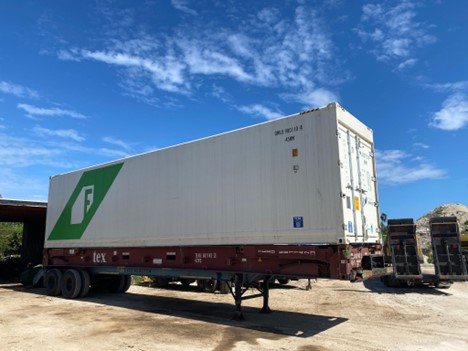
A Freight Farm being Delivered

With the Cayman Islands’ beauty comes a challenging food supply chain. The islands only produce about 1% of their own food, with the rest of the food they consume sourced from Jamaica, Honduras, and, largely, the United States. Relying on shipped produce results in precarious food security. To make matters worse, there are very few direct shipping lines from food-producing Caribbean islands to the Cayman Islands. With lengthy shipping routes, the fresh food that the Cayman Islands ultimately receives is no longer very fresh … and it’s also very pricey.

Enter Freight Farms’ vertical shipping container farms. Codi Whittaker, a young recent college grad, and business partner Kerry Lawrence purchased three container farms from Freight Farms to launch their business, Primitive Greens, with the goal of increasing the sustainability of life on the Cayman Islands.
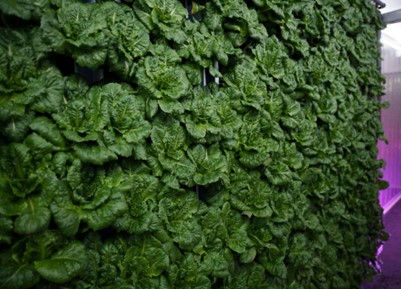
A Lettuce Wall in Primitive Greens Freight Farm

The three Freight Farms allow Primitive Greens to defy the very things that make fresh food so scarce on the island: a lack of arable land, extreme weather which makes farming near-impossible, and those long shipping lines. Instead, Primitive Greens grows right near consumers, inside high-tech shipping containers right on Grand Cayman island. They work the container farms’ perfectly climate-controlled environment to their advantage to grow beautiful, coveted produce. This, they sell to grocery stores and restaurants on the island at a competitive price — offering island establishments and residents reasonably priced, long-lasting, quality produce.
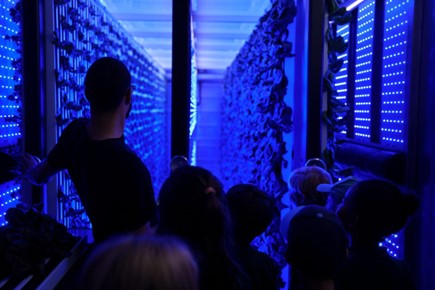
A school group visits Primitive Greens

To increase the sustainability of the business, Primitive Greens plans to install a solar and energy storage microgrid that will fuel the farms with 100% clean energy. Energy cost is up everywhere, and the Cayman Islands are not immune. Currently, Primitive Greens pays the equivalent of $0.40 USD per kilowatt hour of electricity — mostly from dirty diesel fuel offered by the local utility. (By comparison, the current average cost of energy in Los Angeles is about $0.26 USD per kilowatt hour.) The solar project, which features solar panels floating in the water of an old quarry, will not only make growing food more sustainable. It will also provide resiliency to the island, through power that is available 24/7 and independent of the electrical grid.

“We’re basically selling the community cheaper, healthier, more sustainable, locally grown food; we’re providing power for less than half the cost of diesel; we’re creating food security; we’re creating jobs; and we’re not clearing any land.” — Codi Whittaker, Co-Founder and Operator of Primitive Greens

Primitive Greens intends to send Freight Farms to each of the three Cayman Islands, to alleviate food security for the entire territory. Ultimately, they strive to be the providers of fresh produce for Cayman.

Primitive Greens was recently featured in a webinar hosted by Freight Farms on the potential for indoor farming in the Cayman Islands. Watch the conversation at https://www.freightfarms.com/visit-freight-farms/primitive-greens-live-webinar.
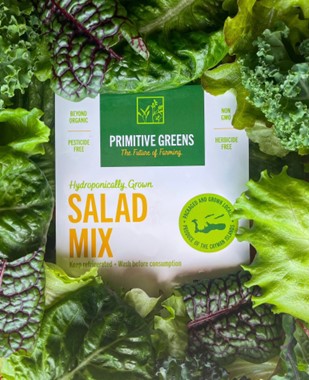
Freight Farms has seen incredible growth in the adoption of their technology in the Caribbean islands, many of which face challenges similar to the Cayman Islands’. From Turks and Caicos to the Bahamas, islanders are discovering the power of controlled environment agriculture to revolutionize food quality and access for themselves and their communities.

About Freight Farms:

Founded in 2012, Freight Farms debuted the first vertical hydroponic farm built inside an intermodal shipping container with the mission of democratizing and decentralizing the local production of fresh, healthy food. Since its inception, Freight Farms has refined its product offering to arrive at the Greenery™ S container farm. With global customers ranging from small business farmers to the corporate, hospitality, retail, education, and nonprofit sectors, Freight Farmers make up the largest network of connected farms in the world. AgTech Breakthrough named Freight Farms the 2022 “IoT Monitoring Solution of the Year” for its farmhand® IoT automation software.

To learn more, visit freightfarms.com or connect on Facebook, Instagram, LinkedIn, Twitter, or TikTok.