From The Packer, March 13, 2025 | By Jennifer Strailey — The state of the industry keynote at Indoor Ag-Con, March 11-12, explored the industry’s past and present challenges, “transformative change,” success stories and more.
The state of the industry keynote at Indoor Ag-Con, March 11-12, explored the industry’s past and present challenges, ‘transformative change,’ success stories and more.
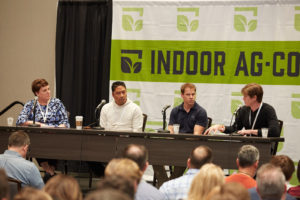
Moderated by Tom Stenzel, executive director of the CEA Alliance, the discussion featured panelists from three different business models of controlled environment agriculture: vertical farming; semi-closed, greenhouse-grown salads; and greenhouse-grown tomatoes.
Panelists including Tisha Livingston, president and co-founder of 80 Acres and CEO of Infinite Acres; Abby Prior, chief commercial officer for BrightFarms; and Skip Hullett, vice president and general counsel for NatureSweet, shared their challenges and triumphs in an industry that has suffered setbacks in recent years.
80 Acres/Infinite Acres
Hamilton, Ohio-based 80 Acres is a vertical farming company producing a range of salads, microgreens, herbs and tomatoes. In an industry where some have focused too heavily on tech in favor of farming, Livingston and her business partner, who co-founded the company in 2015, had the vision to separate the farming and tech sides of the business.
“When we started the company, we recognized that growing and being grower-centric was very important,” she said. “Building out the technology was also important, but they were very different skill sets. So, we created these two companies.”
NatureSweet
Based in San Antonio, Texas, NatureSweet, is a greenhouse tomato grower that owns over 1,500 acres of greenhouse space, has 12 production facilities in Arizona and across Mexico, and distributes its products to retailers nationwide. Best known for its Cherubs snacking tomatoes, the company also grows peppers and cucumbers.
“We’re vertically integrated, so we’re kind of unique in our industry,” said Hullett. “We call it: from seed to smile. We grow, plant, harvest and package.”
BrightFarms
BrightFarms is a controlled environment agriculture grower based in Irvington, N.Y.
“We have a network of farms that support our national customers,” said Prior. “Over the last year, we’ve built three new farms in Illinois, Texas and Georgia, which combined make the largest network of semi-closed, high-tech greenhouses for leafy greens here in the U.S.”
BrightFarms takes a regional approach to grow locally and create regional supply chains and supply hubs for salads across the country, Prior said. The company was acquired by Cox Enterprises in 2021 and is now part of the platform of Cox Farms greenhouse growers that includes Mucci Farms.
Las Vegas, NV – (March 14, 2025)— Indoor Ag-Con 2025, the premier event for the controlled environment agriculture (CEA) industry, concluded its 12th annual two-day conference and expo on March 11–12 at the Westgate Las Vegas. This year’s event welcomed 1,657 attendees from around the globe—including representatives from the U.S., Canada, Australia, the Caribbean, Europe, Latin America, Africa, Tribal Nations, and more—reinforcing its status as the key meeting place for the indoor and vertical farming industry.
The 2025 edition featured the largest Indoor Ag-Con expo floor to date, with more than 300 booths showcasing cutting-edge products, technologies, and solutions designed to help grower/operators improve their businesses, increase profitability, and scale their operations effectively.
“At its core, Indoor Ag-Con is about fostering collaboration, idea-sharing, and networking—and this year’s event truly delivered,” said Brian Sullivan, CEO of Indoor Ag-Con. “Bringing together C-level executives, growers, investors, tech providers, government members, academia, and key stakeholders from every facet of the CEA ecosystem, the conversations and connections made here will shape the industry’s future for years to come.”
12th Annual Edition Highlights
Growing Industry Association Events & Participation
Expanded Venue Benefits: Indoor Ag-Con’s new Westgate Las Vegas location provided increased meeting space and additional networking opportunities for industry associations.
CEA Alliance: Hosted its annual meeting in conjunction with Indoor Ag-Con.
International Sprout Growers Association (ISGA): Held its 33rd Annual Convention alongside the event.
GLASE (Greenhouse Lighting and Systems Engineering Consortium): Returned with its Vivid Canopy Panel & Networking Event.
Women in CEA Luncheon Networking: A new initiative that fostered a collaborative environment through networking, information sharing, and resource exchange.
Aquaponics Association: Hosted an Expo Theater session with accompanying networking opportunities.
The FarmTech Society: Welcomed both current and new members to the event.
New Cultivating Excellence Awards – The CEAs Indoor Ag-Con and Inside Grower magazine launched the inaugural Cultivating Excellence Awards (CEAs) in 2025. Sponsored by bpgrower.com, the new awards recognized excellence, innovation, and leadership within the controlled environment agriculture sector. Announced at a gala awards luncheon, the winners included:
Operational Excellence: Little Leaf Farms (Devens, Massachusetts & McAdoo, Pennsylvania)
Good Stewardship: 80 Acres Farms (Hamilton, Ohio)
Product Innovation: Dramm – CE-Line
Keynote Sessions Morning Keynote – “CEA State of the Industry”:
The CEA Alliance, the membership trade association representing vertical farms and greenhouse producers, presented the opening keynote. Moderated by CEA Alliance Executive Director Tom Stenzel, the session featured industry leaders including:
Tisha Livingston, President, 80 Acres and CEO, Infinite Acres
Skip Hulett, Vice President and General Counsel, NatureSweet
Abby Prior, Chief Commercial Officer, BrightFarms
Day 2 Keynote – “Trends in Canada: Insights from Leading CEA Growers Across the Nation”:
This session featured a dynamic panel of Canadian CEA leaders who discussed the latest industry innovations, sustainability strategies, and business growth opportunities. Moderated by Trina Semenchuk, Founder of Little Greenhouse That Could, the panel included:
Bahram Rashti, CEO & Co-Founder, UP Vertical Farms
Gabriel Forero, Head Grower, Sunterra Greenhouse
Valérie Terrault, Sales & Marketing Director, Gen V
Pre-Event Workshops:
Ceres University hosted two pre-event Food Safety Workshops designed to help industry members meet GFSI scheme requirements.
Conference Sessions:
The conference featured two action-packed days of educational sessions with over 90 speakers across five tracks – Technical Grower, Trends, Planning & Operations, Cannabis and the International Sprout Growers Association 33rd Annual Convention track.
Expo Theater Sessions:
Held on the expo floor, sessions ranging from “Growing Minds: Integrating Controlled Environment Agriculture in K–12 Education for a Healthier Future” to “Not All Hope Is Lost: Vertical Farming’s Future and Lessons from the Past,” drew packed crowds.
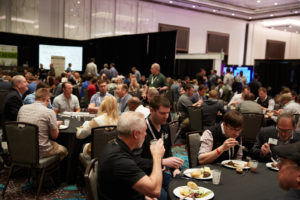
Networking Opportunities Attendees connected with new and old friends at daily networking events, including a conference lunch on the show floor, Expo Hall Happy Hour and the new “That’s A Wrap” closing session and celebration.
Indoor Ag-Con | Philips VIP Welcome Party Back by popular demand, Philips Horticulture LED Solutions once again teamed up with Indoor Ag-Con to kick off the 2025 edition with a VIP Welcome Party on Monday evening, March 10, at Atomic Golf. Conference speakers and industry VIPs gathered for an evening of golf, networking, cocktails, food, music, and fun—courtesy of Philips LED Horticultural Lighting.
Indoor Ag-Con 2026 is scheduled for February 11–12, 2026 at the Westgate Las Vegas. For more information, please visit www.indoor.ag.
About Indoor Ag-Con
Founded in 2013, Indoor Ag-Con has emerged as the largest trade show and conference for vertical farming, greenhouse, and controlled environment agriculture. Its events are crop-agnostic and cover all sectors of the business—from produce and legal cannabis/hemp to alternate protein and non-food crops. For more details, visit www.indoor.ag.
The Center of Excellence for Indoor Agriculture, a U.S. based company that supports the growth of the vertical farming and greenhouse industry, has been awarded a Pennsylvania Agricultural Innovation Grant to advance the design of energy- efficient indoor farms. This initiative will support the development of cutting-edge strategies to reduce energy consumption while enhancing productivity in controlled environment agriculture (CEA).
The grant, provided for by Governor Shapiro’s 2024-2025 budget and administered by the PA Department of Agriculture, is part of the state’s commitment to fostering agricultural innovation and sustainability. With indoor farming on the rise, optimizing energy use is a critical step toward making these operations more cost-effective and environmentally friendly.
“We are thrilled to receive one of Pennsylvania’s first Agricultural Innovation planning grants,” said Dr. Eric W. Stein, Executive Director, Center of Excellence for Indoor Agriculture. “This funding will enable us to develop innovative design models that help indoor farms maximize efficiency, lower costs, and reduce their carbon footprint while ensuring consistent food production year-round.”
The Center’s project will focus on integrating advanced energy-efficient production technologies, supply chain optimization, facility design, and renewable energy systems into a scalable indoor farm solution. The goal is to provide Pennsylvania farmers and agribusinesses with methods of growing indoors that are sustainable and profitable.
“Our farmers form the backbone of our economy here in Pennsylvania — they put food on our tables and in our stores and restaurants every day. If we want to compete and succeed as a Commonwealth, then we have to invest in them,” said Governor Shapiro on the Commonwealth’s web site . “We are announcing investments in game-changing projects that are fueling the future of farming in Pennsylvania — and giving farmers and ag producers the tools they need to get ahead. Thefuture of our economic success and opportunity runs through our farmlands, and we are going to continue to invest in agricultural innovation in my Administration.”
The Center of Excellence for Indoor Agriculture will collaborate with industry experts, academics, and design engineers to refine and implement best practices. The insights gained from this initiative will be shared with the broader indoor farming community through reports, presentations at industry association events, and social media.
For more information about the Center of Excellence for Indoor Agriculture and its ongoing initiatives, visit indoorgacenter.org.
About the Center of Excellence for Indoor Agriculture
The Center of Excellence for Indoor Agriculture is dedicated to advancing sustainable, technology-appropriate solutions for indoor farming through research, education, and industry collaboration. For investors, entrepreneurs, industry partners, and community organizers, the Center helps to de-risk the process of building sustainable and profitable indoor vertical farms and greenhouses. For communities, the Center supports the growth of innovative agricultural systems that ensure food security and environmental stewardship. The Center is located in the Philadelphia metro region.
When we hear about Total Controlled Environment Agriculture (TCEA) and strawberries, there is a big buzz and excitement surrounding it. This is because TCEA is a somewhat costly agri-technology, requiring significant investment and precision, and strawberries as a crop need loads of TLC. While early adopters of vertical farming/TCEA focused primarily on leafy greens and microgreens, growers seeking high-profitability crops have turned to strawberries as a promising option.
Strawberries in TCEA: An Opportunity for Year-Round Production
Strawberry consumption could be year-round, but due to climatic restrictions such as temperature, humidity, and sunlight availability, it is not always possible. TCEA solves this problem by ensuring continuous production, making fresh fruit available regardless of geographic location and season. At the same time, strawberries offer a strong diversification option for vertical farming companies looking to expand beyond greens.
Challenges and Failures in TCEA Strawberry Production
Ferme GUSH farm; Montreal based, pesticide-free TCEA strawberry farm using substrate-free cultivation method.
While the potential for strawberries in TCEA is high, there have been significant failures among new entrants. Many startups enter the industry with ambitious goals and high expectations but fail to achieve them because they neglect the advice of horticulturists, plant scientists, and experienced strawberry growers. Often, the neglected advice relates to infrastructure (growing system) and tech decision-making (HVAC, LEDs etc), but also plant-related decisions, such as what type of soilless method will be used (substrate, NFT, etc.) and what pest management plan will be followed (use of only bio-control or also conventional pesticides), among many other factors.
Strawberries may seem like an ideal candidate for vertical farming due to their plant structure, but their infrastructure requirements, environmental control needs, and necessary husbandry practices differ significantly from leafy greens and microgreens. Underestimating these differences has led to many unsuccessful ventures.
Often, new entrants into vertical farming come from engineering or financial backgrounds and assume that growing plants follows simple mathematical equations. However, biology does not work like engineering—in any biological process, 1 + 1 does not always equal 2; sometimes it equals 0.5, and other times it equals 4. Many engineers struggle to understand the deep impact environmental factors have on plant performance, and those who fail to recognise the variability of biological systems often fail in strawberry TCEA production. This reinforces the need to consider the expertise and advice of plant scientists and experienced growers.
Cultivar Selection vs. Crop Management x Environment
A common question in the industry is: “What is the best cultivar to grow in TCEA?” Many people assume that cultivar selection is the most important factor, but they forget that genetics alone do not determine success.
The management of the crop and the environmental conditions impact gene expression, yield, and fruit quality. Even if growers select a high-yielding, high-brix cultivar, it will not perform well unless environmental conditions, crop care, and husbandry practices are optimised. Strawberries, unlike leafy greens, require much more in-house experience to detect early issues before sensors pick them up.
KropAI, an India-based startup, expanding its focus beyond leafy greens and microgreens to explore strawberry cultivation.
Advice for Startups: Rather than focusing solely on cultivar selection, new entrants should work with any strawberry variety available to them at the time, consult their propagators and suppliers, and prioritise obtaining healthy, high-quality plants—even if they are not the ideal variety at first. If startups discuss their specific TCEA system with suppliers, they can receive the best possible plants based on availability. Once major management and environmental factors are finalised, then it is the right time to focus on cultivar selection.
Pollination in TCEA Strawberry Cultivation
Pollination presents a frequent challenge in TCEA strawberry farming. In polytunnels and glasshouses, growers rely on natural pollinators or commercially supplied bumblebee hives. However, in TCEA environments, where LEDs are the sole source of lighting, pollination strategies must be carefully managed.
Many growers struggle with using bumblebees in TCEA, despite the fact that the absence of UV light is not necessarily a limiting factor. However, bee well-being and factors such as dawn and dusk lighting conditions, hive placement, and transportation play a major role in pollination success.
Additionally, multi-focal artificial light sources can trigger object-avoidance behaviour in bumblebees, making them expend extra energy as they mistake static objects for moving ones. This results in energy loss and premature bee deaths.
While many growers have successfully integrated bumblebee pollination into TCEA, variability of hive “personality” (yes; they have personality) and delivery conditions remains an uncontrolled factor. Alternative pollinators, such as hoverflies, offer promising solutions but are not yet widely available commercially.
Energy Challenges in TCEA Strawberry Production
Energy costs remain one of the most significant challenges in TCEA strawberry production. Running a fully controlled environment requires high electricity consumption, particularly for LED lighting, climate control, and dehumidification systems. These energy demands make production expensive, particularly in regions with high electricity prices.
FlexFarming grow room implementing the “Farm-as-a-Battery” concept, dynamically adjusting energy consumption in response to next day’s energy prices.
To mitigate these costs, some growers are exploring alternative and renewable energy sources, such as solar, wind, and geothermal power, to reduce reliance on grid electricity. Additionally, energy brokerage deals and dynamic pricing models—where growers adjust their energy consumption based on fluctuating electricity prices—are being tested. However, the long-term impact of adjusting energy inputs on fruit quality, yield, and consistency is still unknown. Finding the right balance between energy efficiency and crop performance remains a key research priority.
More development in energy sourcing is needed before TCEA strawberry production becomes widely profitable, apart from regions where energy prices are already low. Investments in energy-efficient technologies, such as advanced insulation, heat recovery systems, and smart climate control algorithms, will be crucial to improving the economic viability of TCEA strawberries in the future.
The Challenges of Strawberry Propagation in TCEA
Strawberries are traditionally propagated asexually through runners to maintain genetic consistency. However, this propagation process has traditionally taken place outdoors, where plants pick up pests and diseases that later enter growing systems.
For TCEA growers, maintaining a pesticide-free environment is a priority, making young plants with inherited pest and diseases a major issue. While propagators do their best to supply clean plants, the problem is systemic throughout the industry, as plants are grown outdoor in soil and sand.
To address this, the industry is exploring propagation alternatives, including:
Asexual propagation using tissue culture plants as starting material for mother plants.
Tissue cultured plants used as fruiting plants, bypassing the mother plant stage.
F1 hybrid seeds as an alternative propagation method.
Strawberry propagation in TCEA at Niab, UK; using the mother plants, harvesting daughter plants from runner and growing them in TCEA until ready for chilling. Part of a £1.8M, 3-year Innovate UK consortium project exploring the potential of TCEA for high-health plants.
While these methods hold promise, each requires specialised knowledge and infrastructure. New startups should avoid getting involved in propagation initially, as it is far more complex than fruit production and could overcomplicate operations in the early stages.
The Future of Strawberries in TCEA
Many companies are now successfully growing strawberries in TCEA, but approaches vary:
Commodity markets: Large-scale strawberry production for supermarkets, aiming to compete with glasshouse-grown strawberries.
While it is possible to grow strawberries profitably in TCEA, gaps in industry knowledge remain. Many new entrants seek specific growing parameters, such as light spectrum, intensity, and photoperiods. However, this data is scarce, as most strawberry cultivation research has been done in polytunnels and glasshouses, or not done at all, as the knowledge of the effects of light on plants was not a very useful thing to know, or they could not really do anything even if they knew more about it.
Japanese cultivars propagated and grown for fruit at Aloalto’s facilities in Barcelona, supplying high-end strawberries directly to restaurants and consumers.
Bridging the Knowledge Gap
Key gaps in scientific knowledge regarding strawberry cultivation include:
A deeper understanding of light requirements across different cultivars, including photoperiod, light intensity, spectrum, and how these factors change throughout developmental stages.
The precise chilling requirements for each individual cultivar.
A detailed understanding of the specific environmental conditions necessary to trigger flower initiation in different cultivars.
Since most historical research has focused on sunlight-grown strawberries, the industry must invest in new studies to gather this crucial information. However, startups are not those to have to conduct such research, as it requires rigorous experimental design, data collection, and significant resources. This is an area where larger research organisations must step in, with potentially public funding.
Final Thoughts
There is a growing movement toward TCEA strawberry production, both for fruiting and propagation stages. However, to ensure long-term success, new entrants must learn from past failures. By consulting plant scientists, embracing biological variability, and avoiding over-reliance on engineering solutions, while addressing energy challenges, the industry can make TCEA strawberries a widespread success.
If startups trust plant scientists and experienced horticulturists, rather than solely relying on financial models and engineering logic, TCEA strawberries will become far more successful than they are today.
About InnoPhyte Consulting
InnoPhyte Consulting, founded by Katia Zacharaki, is a dynamic firm dedicated to advancing AgriTech innovation, with a strong background in Total Controlled Environment Agriculture (TCEA), particularly for greens and strawberries. InnoPhyte offers a unique “Science-as-a-Service” approach, providing flexible support to companies with their research needs, data analysis, report and presentation creation, grant writing, market analysis, LCAs and project management. Specialising in assisting small and medium enterprises, InnoPhyte helps bridge the gap between scientific expertise and practical application, driving success in the AgriTech sector. Visit InnoPhyte.co.uk or email us at hello@innophyte.co.uk.
February 19, 2025 – Oberlin, OH — AdeptAg, North America’s leading horticultural solutions provider, is excited to announce a strategic partnership with FGM, a Danish innovator known for its Moving Gutter Systems (MGS). This collaboration unites two industry leaders dedicated to delivering and servicing solutions for the Controlled Environment Agriculture (CEA) sector.
FGM’s Moving Gutter System has gained international acclaim among growers for its capacity to optimize space and enhance plant growth. Designed for crops such as lettuce, herbs, vegetables, and other leafy greens, MGS offers a revolutionary approach to improving efficiency and sustainability.
Through this partnership, AdeptAg will serve as the exclusive North American distributor for FGM’s grow systems and various FGM-manufactured horticultural equipment, enabling growers across the continent to access this cutting-edge, labor-saving technology. AdeptAg’s family of experienced companies—Agrinomix, Zwart Irrigation, and Plantech Controls—will contribute to these projects.
Industry-Leading Service and Support
David Stienes, AdeptAg’s CEO, stated: “North American leafy green, vegetable, and herb producers face the challenge of finding reliable growing systems that keep them competitive in the market for years to come. We know our partnership with FGM’s Moving Gutter Systems will enable us to provide the most comprehensive solution on the market, along with the ability to maintain and service that technology throughout its lifecycle—a service that no other provider can truly match today.
Currently, many users of moving gutter systems lack a North American team of domestic service personnel, and when issues arise, they are dependent on remote support from companies an ocean away. If a grower purchases an FGM system from AdeptAg, they can trust that we will be there on-site when service is required.”
Jeff Warschauer, FGM’s Director of Business Development and Key Account Sales, echoed this sentiment, adding: “A more formal cooperation was the logical next step after many successful years of collaboration with AdeptAg on various projects in North America. We know this partnership will provide growers with the best of both worlds—advanced technologies and exceptional North American service.”
“AdeptAg’s comprehensive offerings include irrigation systems, water treatment, seeding, propagation, transplanting, harvesting equipment, UL/CSA electrical designs and installations, as well as controls for semi- and fully automated solutions.”
“After 40 years in the greenhouse industry, I trust that AdeptAg will continue to deliver the highest level of customer service that so many North American growers have come to expect.”
Why Choose an FGM Moving Gutter System?
Maximize Growing Area and Yield
MGS allows for dynamic spacing adjustments throughout the growing cycle. By optimizing plant density, growers can maximize yield while reducing unused growing areas.
Reduce Water Risk and Waste
MGS utilizes flow-compensated systems to deliver precise amounts of fertigated water to gutters. The water is collected and treated, allowing for more effective water management with lower flow rates and volumes—using up to 90% less water than open-field crops, with no runoff into the environment.
Tailored to Your Needs
FGM’s modular designs can be customized to meet the unique demands of your crops, greenhouse layout, and production goals. Combined with AdeptAg’s comprehensive service and support, you’ll have a system designed for long-term success.
A Partnership You Can Trust
With AdeptAg’s local expertise and FGM’s MGS technology, growers gain access to an unparalleled combination of innovative systems and dedicated service. From system design and installation to ongoing maintenance and support, AdeptAg ensures that your investment delivers long-term value.
Experience the Future of Leafy Green Growing
Join the many growers who have already unlocked their greenhouse’s potential with FGM Moving Gutter Systems. Let AdeptAg help elevate your operation to the next level.
For Sales Inquiries, Please Contact:
Kevin Prol
Director of Product Management • Sales
AdeptAg Email: kprol@adeptag.com
Jeff Warschauer
Director of Business Development – Key Account Sales
FGM
Email: jeffw@fgmusa.net
Indoor Ag-Con, the premier trade show and conference for the controlled environment agriculture (CEA) , greenhouse and vertical farming industry, proudly announces the opening morning keynote address for the March 11-12, 2025 edition at the Westgate Las Vegas. Titled “CEA State of the Industry,” this moderated discussion will be held on Tuesday, March 11, 8 am. During the keynote, leaders of the CEA Alliance will share their views on the state of the industry, focusing on today’s challenges and tomorrow’s opportunities. Growers will address the outlook for indoor vertical farming and high-tech greenhouse production, including production of leafy greens, tomatoes, berries and more.
Moderated by CEA Alliance Executive Director Tom Stenzel, the keynote panel includes leaders across the CEA landscape: Tisha Livingston, President, 80 Acres and CEO, Infinite Acres, Skip Hulett, Vice President and General Counsel, NatureSweet and Abby Prior, Chief Commercial Officer, BrightFarms.
“The Opening Keynote is one of the highlights of Indoor Ag-Con, and sets the stage for the 2-day conference, which is jam packed with inspiring and thought-provoking sessions,” said Brian Sullivan, CEO, Indoor Ag-Con. “We are honored to have three industry leaders whose expertise will provide attendees with actionable insights and a roadmap for success in this rapidly evolving industry.”
“I’m excited to moderate the CEA State of the Industry keynote at Indoor Ag-Con as it’s not just about guiding a conversation, it’s about challenging perspectives, uncovering solutions, and pushing the boundaries of what’s next in controlled environment agriculture,” added Tom Stenzel, Executive Director, CEA Alliance. “This industry moves fast, but the real impact comes when visionaries, growers, and leaders come together to shape the future of food.”
Look for more information on the day two keynote coming soon. In addition to keynote general sessions, attendees will have the opportunity to choose from a full roster of educational programming, explore the largest expo floor in the show’s 12-year history and network at daily luncheons, breakouts, an opening day cocktail reception, and more.
For more information on the keynotes and Indoor Ag-Con visit www.indoor.ag
ABOUT INDOOR AG-CON
Founded in 2013, Indoor Ag-Con has emerged as the largest trade show and conference for vertical farming | greenhouse | controlled environment agriculture (CEA). The event brings together industry professionals from across the globe to explore the latest trends, technologies, and innovations in the CEA sector. Its events are crop-agnostic and touch all sectors of the business, covering produce, legal cannabis | hemp, alternate protein and non-food crops. More information, visit www.indoor.ag
ABOUT THE CEA ALLIANCE
The Controlled Environment Agriculture Alliance is a membership trade association representing and serving vertical farms and greenhouse producers growing fruits and vegetables in a highly controlled indoor production environment. More information is available at www.ceaalliance.com
New Indoor Farm in Westbrook Begins Inclusive Hiring Process
Greater Portland Maine Metro Area – January 30, 2025 – Vertical Harvest Farms, an indoor farming company focused on customized employment for people with disabilities, is excited to announce hiring in support of their new 51,000 square-foot hydroponic indoor farm in downtown Westbrook, Maine.
The farm is slated to begin producing 2.5 million pounds of fresh, leafy greens for New England consumers, the culinary community and local institutions later this year. And the company is especially excited to offer locally grown, nutritionally dense and radically delicious microgreens to the Maine community, believing that good can (and should) taste great.
Vertical Harvest is also unique for practicing customized employment, with a focus on fostering human potential and offering reasonable and appropriate accommodations for people with disabilities via its Grow Well employment model. Co-founder Caroline Croft Estay and team developed this one-of-a-kind program at its original farm in Jackson, Wyoming and has been evolving it since 2016. “We believe in the dignity of work, the power of community and that everyone deserves a fair shake at a meaningful career, growth and economic independence – which is not always accessible to people with disabilities.” says Croft Estay.
The company is currently fielding applications for their first round of hires – focused on farm leadership, operations, sales and marketing roles. Once the management team is in place, the second round of hiring will begin focused on filling the farm’s growing associates, packaging and fulfillment roles.
A list of open positions is currently available on its website. Interested applicants can sign up to be notified of future rounds of hiring as well as request any accommodations needed to support the application process. Of the milestone, CEO Nona Yehia says, “This moment is the culmination of years of effort and collaboration with our partners in Westbrook and the state of Maine. We aim to be a community farm that makes fresh, delicious produce radically accessible and where we’ve set a place at our table for everyone.”
About Vertical Harvest
Vertical Harvest is a hydroponic, vertical farming company dedicated to community-oriented farms, food and futures. In addition to their passion for local, healthy food grown sustainably, Vertical Harvest also operates on an inclusive, customized employment model with farms designed for accessibility and staffed via hiring practices developed to support meaningful employment for people with disabilities. For more information visit www.verticalharvestfarms.com and sign up for the newsletter or follow on socials at @verticalharvestfarms.
The hospitality industry is a growing sector that continues to expand, with emerging trends such as Sustainability and Eco-Friendly Practices, a focus on Health and Wellness, Unique Experiences and Local and Authentic Cuisine. These trends can be combined with local food production in Controlled Environment Agriculture (CEA), which can offer educational tours, workshops, and generally more nutritious food produced locally. Also, CEA offers many advantages, such as providing fresh produce regardless of external conditions, reducing water consumption, and eliminating the use of pesticides and insecticides.
We will discuss the topic “Harvest to Hospitality: Bridging CEA with the Service Industry” on Tuesday, March 11, 2025, at Indoor AgCon, at 9 AM PST. The panel will feature Marc Oosterhuis, CEO of Babylon MicroFarms; David Flynn, CEO of AmplifiedAg Inc; and Jack Murana, Program Coordinator for FoodU at Auburn University.
CEA includes various methods of controlled food production, such as: 🌱 Greenhouses – High-tech facilities optimizing sunlight and climate control 🏢 Vertical farms – Multi-layered indoor farms using hydroponics and artificial lightning 🚛 Container farms – Self-contained units that allow food production anywhere 🛒 In-store units – Small-scale farming solutions inside supermarkets, rooms and restaurants
All of the above can also be integrated into the growing trend of Agritourism, which is gaining traction worldwide and something that Agritecture Consulting has been heavily involved in designing for projects around the globe in recent years.
What is Agritourism?
Agritourism is a tourism sector that combines agriculture with travel experiences, allowing visitors to engage directly with food production, farming activities, and rural culture. It offers unique and immersive experiences, such as farm stays, agricultural workshops, hands-on harvesting, and tasting local, farm-fresh products.
Who Is Developing the Hospitality Project?
A key consideration when integrating Controlled Environment Agriculture (CEA) into the hospitality industry is understanding the diverse range of stakeholders involved. These can vary widely—from small-scale farmers looking to enhance their farm-to-table offerings, to real estate developers seeking to incorporate sustainable food production into their properties, and even to some of the world’s most luxurious architects designing high-end resorts with on-site vertical farms or greenhouse dining experiences.
Farmers – Growers
Farmers and growers can successfully integrate Controlled Environment Agriculture (CEA) with hospitality by supplying locally grown, fresh produce directly to restaurants, hotels, and other culinary businesses. Ensuring consistent quality, freshness, and aroma is crucial—an advantage that CEA can provide. By focusing on specialty crops such as edible flowers, microgreens, saffron, and mushrooms, growers can offer unique ingredients that elevate the dining experience and distinguish their produce in the hospitality market.
A great example is Farm One, a former Agritecture client based in Brooklyn, New York. Initially specializing in fresh specialty crops for local chefs, Farm One has since expanded its business model to include a brewery and coworking space. They also offer farm tours, creating a dynamic blend of networking, hospitality, and urban farming. This evolution demonstrates how CEA operations can successfully diversify and integrate into the broader food and hospitality ecosystem.
Real estate developers are increasingly incorporating sustainable food production into their projects, not only to enhance their environmental credentials but also to gain recognition and awards for innovative sustainable developments and smart cities. Beyond sustainability, they must consider how CEA projects engage the community and visually integrate with the overall development. A well-designed CEA space should be both functional and aesthetically appealing, seamlessly blending with the surrounding environment while serving as a focal point for sustainability initiatives.
The priorities for these projects extend beyond production—they must also deliver experiential and educational value. Successful integration excites visitors, offering immersive experiences that showcase the benefits of supporting local farms. Whether through interactive farm tours, on-site restaurants featuring hyper-local ingredients, or educational workshops, these elements help create a deeper connection between urban developments and sustainable agriculture. Agritecture has assisted multiple real estate developers in integrating Controlled Environment Agriculture (CEA) into their projects, tailoring solutions to fit each market and concept uniquely. By understanding the specific needs of different developments, Agritecture proposes practical and scalable strategies that enhance sustainability, community engagement, and overall project value.
Architects specializing in hospitality design are increasingly focusing on incorporating Controlled Environment Agriculture (CEA) into their projects, aiming to create spaces that blend sustainability with a unique guest experience. Their vision centers around making the farming process a visual and interactive element within the space, ensuring that CEA features such as vertical farms or hydroponic systems not only contribute to sustainability but also enhance the overall aesthetic. Through these elements, architects create a holistic, immersive environment that attracts guests seeking both luxury and authenticity.
Architects have concerns regarding the integration of CEA facilities and the structural challenges, such as the weight of racking systems, and how to incorporate these systems into the layouts without compromising the overall design and functionality of the space.
Agritecture has collaborated with numerous architects, especially on high-end luxury concepts, offering everything from conceptual proposals to detailed layout designs for vertical farms inside massive developments like towering skyscrapers.
For example, one of our projects involved a luxury agri-themed hotel in the Middle East, where we proposed a variety of experiences for the guests, ranging from low-tech greenhouses to high-tech strawberry cultivation setups, a seed coffee library, and aquaponic farms. Agritecture’s expertise in both agriculture and architectural design enables us to help architects transform their visions into reality, creating exceptional, sustainable, and immersive experiences for their clients.
Key Elements of a Successful Hospitality, CEA and Agritourism Mix
At Agritecture Consulting, we have successfully implemented these strategies in past projects and can provide expert guidance on designing, developing, and optimizing agritourism ventures that seamlessly integrate Controlled Environment Agriculture into the hospitality industry. After working on compelling agritourism and hospitality projects, we have identified key factors that drive their success:
1️⃣ Local Cultivation – Make sure that the food which is produced on-site or sourced from nearby farms, reinforces authenticity and sustainability. 2️⃣ Educational Workshops & Activities – Offering sessions on sustainable farming, cooking classes, and interactive learning about Controlled Environment Agriculture (CEA) can bring the feeling of community and education into the project. 3️⃣ Impactful Farm Tours – Providing engaging, behind-the-scenes experiences at production sites, allowing guests to see how food is grown in innovative CEA systems. 4️⃣ Destination Design & Local Identity – Create an aesthetically appealing space that enhances the visitor experience while preserving and showcasing the local culture. 5️⃣ Sustainable Business Model – Implementing an economic framework that benefits both producers and consumers, such as Community Smart Agriculture, which fosters direct relationships between farms and customers.
CEA offers a unique approach to local food production by enabling the cultivation of fresh, high-quality produce in urban environments, regardless of seasonal changes or geographical limitations. CEA not only promotes sustainability but also ensures a consistent supply of ingredients for the hospitality industry, enhancing the farm-to-table experience and providing chefs with direct access to locally grown, flavorful produce year-round.
We will be discussing these topics in our exciting panel at Indoor Ag-Con! If you’re involved in hospitality and want to learn more about how CEA can transform your projects, this panel is for you! Whether you’re a technology enthusiast or curious about the future of CEA, join us to dive deeper into innovative solutions and trends shaping the industry. Don’t miss out!
Winners To Be Announced At Gala Luncheon During Indoor Ag-Con 2025 Las Vegas
Indoor Ag-Con, Inside Growermagazine and presenting sponsor BPGrower.com are proud to announce the finalists for the inauguralCEAs — Cultivating Excellence Awards. This prestigious new awards program is designed to recognize and celebrate excellence, innovation, and leadership within the controlled environment agriculture (CEA) sector, spotlighting achievements across three categories: Operational Excellence, Good Stewardship, and Product Innovation.
Presented at a special gala luncheon on Tuesday, March 11, 2025, at the 12th annual edition of Indoor Ag-Con, held at the Westgate Las Vegas, The CEAs will honor trailblazing businesses and standout products that are shaping the future of CEA. Winners in three award categories will be announced at The CEAs gala luncheon:
FINALISTS:
OPERATIONAL EXCELLENCE AWARD FINALISTS
Little Leaf Farms, Devens, Massachusetts & McAdoo, Pennsylvania
Nature Fresh Farms, Leamington, Ontario, Canada
Wild About Sprouts, Sacramento, California
GOOD STEWARDSHIP AWARD FINALISTS
80 Acres Farms, Hamilton, Ohio
Anu, Evansville, Indiana
Fork Farms, Green Bay, Wisconsin
“The inaugural CEA Awards at Indoor Ag-Con mark a significant milestone in recognizing the innovation, dedication, and impact of controlled environment agriculture,” said Brian Sullivan, CEO, Indoor Ag-Con. “We’re excited to honor the finalists and announce the winners at a special awards celebration as they are true pioneers and visionaries driving the future of sustainable food production.”
“We are excited to partner with Indoor Ag-Con to present these awards,” adds Paul Black, Publisher, Inside Grower. “By celebrating the CEA sector’s best and brightest, The CEAs help showcase the innovation and responsibility at the core of our industry. We look forward to shining a spotlight on the industry leaders and products that are making a meaningful difference.”
The CEAs Operational Excellence Award will recognize a single CEA business or one location of a multi-location business that consistently delivers quality products while distinguishing itself through innovation in production, technology, marketing, and overall strategy. Judges evaluated candidates based on their achievements in growing market share, sustaining product quality, and developing practices that set them apart in a competitive landscape.
Good stewardship is foundational in today’s CEA industry, and this award recognizes businesses that are exemplary in their commitment to environmental and community responsibility. The three finalists chosen for The CEAs Good Stewardship Award have showcased initiatives in resource conservation, recycling, and community service.
The CEAs Product Innovation Award highlights finalists from Indoor Ag-Con 2025 exhibiting company submissions representing the most innovative products that solve critical industry challenges and drive customer value.
All Indoor Ag-Con 2025 Full Access Pass Holders are invited to attend The CEAs Awards Luncheon on Tuesday, March 11, 2025 from noon – 1 pm. For more information on The CEAs and Indoor Ag-Con visit www.indoor.ag
ABOUT INDOOR AG-CON
Founded in 2013, Indoor Ag-Con has emerged as the largest trade show and conference for vertical farming | greenhouse | controlled environment agriculture (CEA). The event brings together industry professionals from across the globe to explore the latest trends, technologies, and innovations in the CEA sector. Its events are crop-agnostic and touch all sectors of the business, covering produce, legal cannabis | hemp, alternate protein and non-food crops. More information, visit www.indoor.ag
ABOUT INSIDE GROWER
Part of the Ball Publishing family of media brands, Inside Grower magazine is a leading publication for the controlled environment agriculture industry, providing news, insights, quality crop-specific growing information and timely trend data that can help operations thrive in today’s market. More information, visit www.inside-grower.com
Founded in 2013, Indoor Ag-Con has emerged as the largest trade show and conference for vertical farming | greenhouse | controlled environment agriculture (CEA). The event brings together industry professionals from across the globe to explore the latest trends, technologies, and innovations in the CEA sector. Its events are crop-agnostic and touch all sectors of the business, covering produce, legal cannabis | hemp, alternate protein and non-food crops. More information, visit www.indoor.ag
ABOUT INSIDE GROWER
Part of the Ball Publishing family of media brands, Inside Grower magazine is a leading publication for the controlled environment agriculture industry, providing news, insights, quality crop-specific growing information and timely trend data that can help operations thrive in today’s market. More information, visit www.insidegrower.com
Indoor Ag-Con, the largest show dedicated to indoor agriculture, is the place to find the latest trends shaping the future of farming. Come March 11-12, farmers, growers, ag tech leaders, suppliers, advocates and enthusiasts will converge at Westgate Las Vegas to experience an expanded Expo Hall with 200+ exhibiting companies offering the most cutting-edge products, services and tools on the market.
Indoor agriculture has reached new heights, with innovative technologies and practices, helping pave the way for a sustainable future in food production. As the world faces increasing challenges such as climate change, water scarcity, and urbanization, the indoor farming sector is stepping up to provide solutions to address these global issues.
(Photos above from L-R: Thrive Agritech, VelociGro, Inc., ZGROUP USA, Priva)
Below are some of the trends shaping the indoor agriculture industry today and a selection of highlights from Indoor Ag-Con 2025 exhibitors.
Hydroponics Innovation
Hydroponics, the soil-free cultivation of plants using nutrient-rich water, has become a standard in indoor agriculture. Recently, innovations in hydroponic systems have improved plant growth rates and reduced water consumption.
Just Vertical (Booth 1113) crafts and distributes state-of-the-art, sustainable vertical hydroponic farming systems, revolutionizing agriculture. The innovative systems empower growers, whether small-scale or large-scale, to cultivate fresh, nutrient-rich produce in any space. At Indoor Ag-Con, check out their NEW Just Vertical Grow Racks, Free-Standing Grow Racks redefine flexibility and efficiency in indoor agriculture, setting a new standard for accessibility and innovation. Unlike traditional systems that cater exclusively to experienced growers or specific scales, Just Vertical grow racks are designed to empower anyone—from beginners to seasoned professionals—on any scale. By optimizing vertical and horizontal growing spaces, our technology ensures that every inch of your operation works harder for you.
Concert Bio (Booth 841SZ-1) optimizes greenhouse crop performance via the plant microbiome. They are using cutting-edge data science to identify and provide beneficial microbes to hydroponic growers – creating the ideal microbiome for their crops to thrive. Developing the ideal microbe products to enhance greenhouse crop performance. As agriculture transitions from traditional to hydroponic methods, recreating the delicate balance of microorganisms found in soil – and which plants need to thrive – has become essential for improving crop growth, quality and resilience. Their platform, developed for hydroponic greenhouses, leverages our unrivaled microbiome database to unlock a whole new level of understanding about the hydroponic microbiome and how to improve it.
Profile’s Growing Solutions (Booth 425) division offers a comprehensive portfolio of products that improve substrates and growing / soil blending operations. These product brands include HydraFiber engineered fibers; Profile Sphagnum Peat Moss and Profile Coconut Coir; Florikan controlled-release fertilizer; and a line of Quick Plug bonded media technology for propagation and food production. They now have a line of hydroponic solutions that includes HydraFiber + Coir grow bags and HydraFiber + Coir grow blocks – combining two leading substrates into one hydroponic solutions to service the CEA market with high-performing, cost-effective growing solutions. Profile will have the new hydroponic grow bags on display at Indoor Ag-Con.
Sustainable and Eco-Friendly Practices
As consumers increasingly demand sustainable food options, indoor agriculture has responded with environmentally friendly practices. The use of renewable energy sources such as LED lighting, solar and wind power is on the rise in indoor farming operations, reducing reliance on fossil fuels. Additionally, many indoor farms now implement zero-waste practices, reusing water and recycling materials used in farming operations.
Thrive Agritech (Booth 533) is a recognized leader in the design, engineering, and manufacturing of advanced LED lighting systems specifically for the indoor agriculture market. By focusing on advanced technologies and energy efficient solutions, Thrive Agritech enables growers to optimize plant development, productively increase yields, and reliably reduce operational and maintenance costs. With a deep understanding of the unique challenges faced by indoor agriculture operators, Thrive Agritech delivers on both lighting and power distribution solutions focused on lowering costs of production and maximizing profitability. Thrive Agritech’s commitment to innovation, energy efficiency, and superior customer service positions their company as a trusted partner for growers looking to capture the full potential of a lighting manufacturing partner.
VelociGro Inc (Booth 631) offers patented technology to improve the environment by replacing traditionally wasteful agricultural methods, with gel based biodegradable and compostable grow plugs and mats. They nurture growth that’s not just better for plants, but better for our planet by: Increasing crop yields by up to 40%, Reducing water usage by an average of 30%, Cutting pesticide use significantly, promoting healthier food and ecosystems and helping indoor farms to create a truly “controlled environment” by using our substrates. They are debuting the HYPERroots FT seed starter plugs, HYPERroots FT Microgreen mats, and HYPERroots Liquid at Indoor Ag-Con.
Priva (Booth 525) is a leading technology company specializing in innovative solutions for sustainable horticulture and building automation. They empower growers with advanced climate, water, and energy management systems, optimizing greenhouse operations for increased productivity and resource efficiency. Their offerings include state-of-the-art climate controllers, crop registration tools, and data-driven insights to help businesses achieve sustainability and operational excellence. With a strong commitment to innovation, Priva partners with clients to shape the future of sustainable agriculture and smart environments.Priva will showcase showcase PIM (Priva Irrigation Management), a powerful tool that helps growers optimize irrigation strategies, ensuring precise water, nutrient, and energy use, at Indoor Ag-Con.
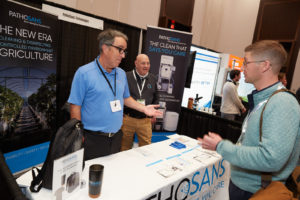
PathoSans (Booth 629) enables customers to produce effective and sustainable cleaning and sanitizing solutions, using just salt, water, and electricity. Through on-site generation, customers can not only produce the solutions they need, when they need them, but they can eliminate the need to bring harmful chemicals into their growing environment. They help put the ‘control’ in controlled environment agriculture. At Indoor Ag-on, they will showcase the newest and smallest on-site generator, the Concentrate Compact generator. This unit is wall-mounted and by producing concentrate, it offers the most flexibility in application possibilities.
Farm-to-Table Accessibility
The growth of indoor agriculture has resulted in fresher, locally grown produce, reducing the carbon footprint associated with long-distance transportation. Indoor farms in urban areas are creating farm-to-table solutions that allow consumers to access fresh and nutritious food grown within their communities. This trend is further supported by advances in logistics and supply chain technologies, ensuring faster delivery and reducing food waste.
ZGROUP USA (Booth 615) specializes in innovative modular refrigeration solutions, offering cutting-edge Cold Storage, Blast Chiller, Blast Freezer and Ripening technologies. With over 20 years of experience, ZGROUP enhances food safety, reduce waste, and promote sustainability.Their blast chiller, which optimizes the freshness of products from farm to table, features innovative forced air cooling system that ensures rapid and efficient cooling, preserving the quality and flavor of the food. This solution is designed for easy integration into farms or packing facilities and is essential for maintaining an effective cold chain.
Based in Etten-Leur the Netherlands, TAKS Handling Systems (Booth 231) develop, make and assemble innovative packing hall solutions and transport systems that are both modular and custom-built. Their systems can process produce such as vegetables and fruits fast and efficiently and will save you a significant amount of labor. When it comes to the automation of your packing hall or logistic system, TAKS Handling Systems has the perfect solution for every situation. Discover our versatile modular products and interesting custom fit solutions.
Sormac Inc (Booth 1003) offers the best post-harvest solutions for indoor growing. Sormac leads the ways in developing process solutions for CEA-grown products. Whether you grow your product in a greenhouse or in a vertical farm of if you use hydroponics, aeroponics or aquaponics. All products are grown gently. This gentle treatment needs to be continued after harvesting so products will look defined in the shops where they battle for the attention of the consumer. Sormac’s proven systems help customers to deliver the highest quality product.
Robotics and Automation
The integration of Robotics and Automation in indoor agriculture is revolutionizing the way food is grown, with precision and efficiency at its core. Advanced robotic systems are being deployed to automate tasks such as planting, watering, pruning, and harvesting, significantly reducing the reliance on manual labor. Sensors play a crucial role by continuously monitoring key environmental parameters such as light, temperature, humidity, and soil moisture, providing real-time data for optimizing crop growth.
Located in Europe’s leading robotics hub, Odense, Denmark, 4XROBOTS (Booth 1114) has developed the world’s first 4-armed collaborative delta robot. Designed for modern production environments in the horticulture sector, their robot aims to improve productivity and operational efficiency. The 4X robot is capable of speeds up to 1,000 mm/second while maintaining collaborative features. This combination of high speed and safety makes it ideal for quality-driven Pick & Place applications. The robot’s 4-armed mechanical design significantly extends its physical reach, providing a larger workspace and greater flexibility. Additionally, it features intuitive programming for fast implementation and remote system access for enhanced uptime and reliability. These innovations collectively set new standards in efficiency, reliability, and operational ease for collaborative robots.
Rooted Robotics (Booth 1032) creates innovative automation solutions for vertical and indoor farming, specializing in affordable, modular systems designed to empower small and medium-sized growers. Their products, including tabletop seeders, harvesters, and washers, streamline labor-intensive tasks while boosting efficiency and yield. With a focus on flexibility, their machines can be integrated into fully automated workflows using groundbreaking L.I.N.C. (Linearly Integrated Networked Conveyors) technology. See the new L.I.N.C. seeder, harvester, and tray/NFT channel washer at Indoor Ag-Con.
Growbud (Booth 431) provides truly wireless grow medium sensors for indoor agriculture. The Growbud software platform enhances plant cultivation by providing real-time environmental monitoring, advanced analytics, and seamless integration with Growbud’s suite of sensors. The insights provided by the platform allow cultivators to dial in irrigation controls to increase crop yield. At Indoor Ag-Con, Growbud will be debuting the Growbud Dro and Vero substrate sensors.
Founded in 2013, Indoor Ag-Con has emerged as the largest trade show and conference for vertical farming | greenhouse |controlled environment agriculture. Its events are crop-agnostic and touch all sectors of the business, covering produce, legal cannabis | hemp, alternate protein and non-food crops. More information, visit www.indoor.ag