Tag: lighting

CEA Summit East Conference Program

CEA Summit East 2026 Unveils Conference Program

Four Deep-Dive Tracks, Greenhouse Sessions and More Set for Sept. 15-16, 2026 In Danville, Virginia

Indoor Ag-Con and the CEA Innovation Center announce the full conference program for the Fifth Annual CEA Summit East, taking place Sept. 15–16, 2026 at the Institute for Advanced Learning & Research (IALR) in Danville, Virginia. The program features four 90-minute deep-dive breakout tracks, keynote addresses, special panel presentations, and the popular CEA Industry & Research Showcase Sessions — with speakers being added to the roster daily.

In a format unique to the Summit, select breakout sessions will be held directly inside the greenhouse of the CEA Innovation Center — putting attendees face-to-face with working research rather than a slide deck. Guided Innovation Center tours cap off the two-day program and are included with every conference pass.

Four Tracks. Twelve Sessions. Real Depth.

Each of the Summit’s four breakout tracks runs across both days, with three 90-minute sessions per track — giving attendees the opportunity to go deep on the topic most relevant to their work. Tracks and sessions are as follows:

TRACK 1: Launching a CEA Operation

• Session 1: Market Research & Defining My Target Market

• Session 2: Building My High Tunnel or Greenhouse: Regulations, Siting and Funding

• Session 3: Starting an Indoor Vertical Farm: Exploring the Models, the Options and What It Really Takes

TRACK 2: Getting Back to Our Roots – Core Horticultural Skills

Held inside the Greenhouse of the CEA Innovation Center

• Session 1: Matching Substrates to Crop & Production System (Soilless & Hydroponic)

• Session 2: Tools For Fertility Management

• Session 3: Lighting Fundamentals: Measurements, Metrics and DLI

TRACK 3: Technology Selection & Data Management

• Session 1: Data Collection & Environmental Monitoring

• Session 2: Data Management & Cybersecurity in CEA

• Session 3: Practical Examples of AI and Automation Integration in CEA Production

TRACK 4: Food Safety & Pest Management

• Session 1: Cleaning & Sanitization Protocols for Food Safety and Plant Health

• Session 2: Insect & Disease Identification in CEA Systems

• Session 3: Building an IPM Plan: Beneficial Insects & Biocontrol Tools

Keynotes, Panels and Showcase Sessions

Keynote addresses on both mornings will set the stage for each day’s programming. Special panel presentations will round out the general session lineup, including a dedicated session on Strengthening the Workforce Ecosystem on Day 1 and a panel focused on What’s Next in CEA Crops – Breeding and Variety Development on Day 2. Keynote speakers will be announced shortly.

The popular CEA Industry & Research Showcase Sessions return across both days — fast-paced, idea-packed presentations from industry innovators and researchers delivering concentrated insight on everything from grower success stories to the latest findings from the field. These sessions are among the most attended and talked-about at the Summit year after year.

The Tour That Everyone Talks About

The guided CEA Innovation Center tour — included with every conference pass — closes out the Summit on the afternoon of Sept. 16. Attendees will explore the research greenhouse, automation systems, and ongoing trials driving the future of controlled environment agriculture. This is not a marketing showcase: it’s a firsthand look at how science and innovation are shaping real-world CEA solutions, led by the researchers and specialists doing the work. Additional tour stops will be announced in the weeks ahead.

Register and Learn More

The full schedule, speaker roster, tabletop exhibits and registration are available at www.ceasummit.com. Speakers are being added regularly; the complete line-up will be announced in the coming weeks. For exhibitor and sponsorship inquiries, contact Suzanne Pruitt at suzanne@indoor.ag or 404.452.1884.

ABOUT CEA SUMMIT EAST

The CEA Summit East is an annual conference bringing greenhouse growers, vertical farm operators, and controlled environment agriculture (CEA) professionals together with researchers, suppliers, and industry leaders. Produced by Indoor Ag-Con and the CEA Innovation Center — a joint project of IALR and the Virginia Tech College of Agriculture and Life Sciences — the summit focuses on the intersection of protected cropping, production science, and emerging technology. Held at the IALR in Danville, Virginia, the event includes keynote presentations, panel discussions, breakout sessions, tabletop exhibits, and guided tours of the CEA Innovation Center’s working research facility. For more information, visit www.ceasummit.com.

ABOUT INDOOR AG-CON

Founded in 2013, Indoor Ag-Con is North America’s largest trade show and conference for greenhouse, controlled environment agriculture and vertical farming. The event covers all crop types and brings together growers, tech providers, researchers, and business leaders to explore trends and innovations shaping the future of food production. For more information, visit www.indoor.ag.

ABOUT THE CEA INNOVATION CENTER

The CEA Innovation Center is primarily housed in Danville, Virginia, on the IALR campus and in Blacksburg, Virginia, on the Virginia Tech main campus. It is a joint project between the Virginia Tech College of Agriculture and Life Sciences and IALR to serve the growing controlled environment agriculture industry. It addresses the needs of the industry with research, education, and extension programs. For more information, visit www.ceaic.org

Introducing Table Talk: Technical Grower Roundtables & Networking at Indoor Ag-Con

Introducing Table Talk: Technical Grower Roundtables & Networking — Created & Hosted by Dr. Greenhouse

At Indoor Ag-Con, we know that some of the most valuable insights don’t always come from a stage—they come from conversations with peers who are facing the same technical decisions and operational challenges you are every day.

That’s why we’re excited to introduce Table Talk: Grower Technical Roundtables & Networking, a new interactive session created and hosted by Dr. Greenhouse and debuting at Indoor Ag-Con 2026. Designed specifically for growers and production-focused professionals, Table Talk creates space for honest, practical, peer-to-peer dialogue around the real-world issues shaping controlled environment agriculture today.

📅 Event Details

Thursday, February 12, 2026
1:00 – 2:15 PM (PST)
📍 Indoor Ag-Con | Westgate Las Vegas


What Is Table Talk?

Table Talk is a grower-focused networking session built around facilitated technical roundtables. Rather than traditional presentations, this format encourages participants to sit down with fellow growers and industry experts to dig into specific challenges, compare approaches, and share what’s working—and what isn’t.

By bringing together growers across different crop types, scales, and production models, Table Talk fosters meaningful cross-pollination of ideas. Attendees will walk away with actionable insights, proven strategies, and fresh perspectives they can apply immediately in their own operations.


Roundtable Topics & Facilitators

Each table will focus on a critical area of CEA production, guided by an experienced facilitator to keep the conversation focused, productive, and practical:

🌱 Rooted in Strength

Topic: Irrigation & Nutrients
Facilitator: Michelle Keller, Chief Horticulture Officer, Living Greens Farm

💡 Illuminated Growth

Topic: Lighting
Facilitator: Rodrigo Pereyra, Good Leaf

🌡️ Controlling the Weather

Topic: Climate
Facilitator: Dominick DiMucci, Haven Greens

🎯 Guiding the Process

Topic: Crop Steering
Facilitator: Nick Denney, Holistic Industries

🏗️ Shoo Fl

Topic: PIPM
Facilitator: Aaron Fields, Campo Caribe


Why Attend?

Table Talk is ideal for growers who want:

  • Real-world, technical conversations—not sales pitches
  • Peer-driven learning from operators facing similar challenges
  • Focused discussions on irrigation, lighting, climate, crop steering, and facility design
  • Meaningful networking with fellow growers and trusted experts

Whether you’re optimizing an existing facility or planning what’s next, Table Talk offers a rare opportunity to slow down, compare notes, and learn directly from others in the field.


Table Talk: Grower Technical Roundtables & Networking is included with your Indoor Ag-Con pass and takes place on Thursday, February 12, from 1:00–2:15 PM. Space at each table is limited—so come ready to engage, share, and learn.

We’ll see you at the table. 🌱

iGrow News European Report

iGrow News Launches 2025 European Indoor Farming Report

 iGrow News, part of the AgTech Media Group, has officially launched the 2025 European Indoor Farming Report, which is now publicly available for download.

This year’s edition offers a detailed overview of the European indoor farming landscape, covering greenhouse consolidation, investment patterns, and technological adoption across vertical farming and high-tech greenhouse operations. It combines firsthand insights from technology providers, operators, and analysts across the region.

Key Themes Explored:

● Ongoing consolidation among Europe’s largest greenhouse operators
● Fewer individual players but increased acreage under production
● Stronger demand for automation in propagation, lighting, and environmental control
● Regional growth opportunities and capital market trends in CEA

Who Is This Report For?

The European Indoor Farming Report is designed for professionals, stakeholders, and decision-makers across the controlled environment agriculture (CEA) value chain. This includes:

● Investors and Venture Capitalists seeking market insights and emerging opportunities in the indoor farming sector.
● Greenhouse and Vertical Farm Operators exploring benchmarks, technology integrations, and regional trends.
● AgTech Startups and Solution Providers looking to understand market demands and identify strategic partners.
● Policy Makers and Public Sector Entities interested in data-driven perspectives on food security, innovation, and sustainability in Europe.
● Academic Institutions and Researchers examining the evolution of CEA technologies and business models.

Whether you’re evaluating market entry, scaling operations, or investing in innovation, this report provides the data, expert perspectives, and industry context to inform your next move.

The report is co-authored by Sepehr A. Achard, COO of AgTech Media Group and Publisher of iGrow News, and Thea-Isabella Otto, Head of The Indoor Farmer and Founder of Women in CEA.

“An increasing number of companies are looking to integrate technologies throughout their supply chains, rather than seeking a one-size-fits-all solution,” said Sepehr A. Achard. “This trend is reflected in the rise of greenhouses adopting vertical farms specifically for their propagation units.”

“The trend towards autonomous growing is clearly visible.” said Thea-Isabella Otto. “However, until full implementation it will still take some years.”

The European edition follows the successful launch of the U.S. Indoor Farming Report earlier this year, with a GCC-focused edition slated for release in Q3.

📥 Download the 2025 European Indoor Farming Report here: https://igrownews.com/agtech-report/indoor-farming/europe/

About iGrow News
iGrow News, part of the AgTech Media Group, is a leading digital platform reporting on global innovations in agriculture technology. Reaching over 50,000 monthly readers, it delivers up-to-date coverage on controlled environment agriculture, precision farming, biotech, and AgTech investment. iGrow News is the publisher behind the Vertical Farming Podcast, AgTech Digest, and The Indoor Farmer. More info:
📧 hello@agtechmediagroup.com 🌐 https://igrownews.com

Glase Case Study with Wheatfield Gardens

Wheatfield Gardens Takes Advantage of the New York State Greenhouse Database and Benchmark Program

Niagara County, New York
A greenhouse owner accesses an insightful report and benchmarking tool to learn, compare, and improve their operation.

GLASE


Background:

The Greenhouse Lighting and Systems Engineering (GLASE) consortium, with support from the New York State Energy Research and Development Authority (NYSERDA), and in partnership with EnSave, has shared a benchmarking tool for commercial greenhouses in New York State since 2020. The New York State Greenhouse Benchmarking initiative helps growers understand key greenhouse energy performance metrics and compares their operation’s performance to that of their peers based on meaningful metrics such as input energy required per unit of crop produced. This program uses third-party FlexTech consultants to deliver benchmarking services and reviews final reports with GLASE Principal Investigators for accuracy.

As more growers benchmark their facilities to optimize operating expenses, the program aims to share anonymized state-level performance data so growers can compare against their competition while protecting data privacy.

Benchmarking reports are great tools to give businesses insights on ways to save money. Complete reports include: a facility overview with the current baseline energy usage; detailed usage and analysis to quantify relative energy performance of each greenhouse and crop; greenhouse technology scoring and upgrade recommendations that can be used to improve energy performance; and an appendix of references and resources. The reports, generated by

FlexTech consultants and reviewed by GLASE researchers, allow growers to focus on their operations and implement recommendations with confidence.

Operations at a Glance:

Company: Wheatfield Gardens Industry: Agriculture

Location: North Tonawanda, NY

A variety of crops are grown at the 550,000 ft2 hydroponic indoor Wheatfield Gardens facility, including lettuce, culinary herbs (e.g., basil), industrial hemp, adult-use cannabis, nursery plants (bedding, landscaping, and hemp), and blackberries. The greenhouse benchmarking report covered energy use and production from October 2021 to September 2022. The analysis is based on operations and equipment data collected during a site visit conducted on September 27, 2022, along with utility bill records from the preceding twelve-month period.

Glase Case Study with Wheatfield Gardens“The granularity of the report was actually beneficial. Some people might find it too detailed, but I see it as the kind of analysis that helps improve operations and the bottom line. I’m responsible to investors, and they care about the bottom line. If we can make cuts or improvements in energy use, it helps everyone.”

Paal Elfstrum, CEO and founder of Wheatfield Gardens

Enhancing Energy Efficiency:

Greenhouse Benchmark Reports include recommended actions for growers to enhance energy efficiency and performance. The report gave Wheatfield Gardens the data it needed to implement two key upgrades: (1) installing an energy curtain for the cannabis flower canopy to retain heat at night and improve efficiency and (2) replacing outdated lighting with 2.3 µmol/W LEDs, based on the report’s confirmation of inefficiencies in the existing setup.

Installing energy curtains

Energy curtains, also known as energy screens, thermal curtains, or heat curtains, help retain heat in greenhouses during nights or cold, cloudy days, reducing heating fuel use by 30–60% compared to greenhouses without curtains. They conserve heat by creating an insulating air layer, reducing the volume of air to be heated, and reflecting radiated heat back inside. Additionally, in summer, energy curtains offer shade, which lowers the electricity costs of mechanical cooling.

Installing a higher efficacy lighting system

Horticultural lighting efficacy measures photosynthetically active radiation (PAR) output per watt, expressed as photosynthetic photon efficacy (PPE) in µmol/J. PPE ranges from 0.9 for older fluorescent and 1.7 for HID fixtures (e.g., HPS and metal halide) to 3.5 for advanced LED fixtures. LED fixtures offer benefits like dimmability and wavelength control for plant growth.

While LEDs are pricier than HID options, utility incentives can help offset upgrade costs.

What’s next for Wheatfield Gardens?

Wheatfield Gardens stands out for its innovative approach to sustainability, particularly its commitment to CO₂ capture and reuse. Unlike many cannabis operators that purchase CO₂ for crop fertilization, Wheatfield Gardens captures CO₂ from its natural gas combustion through its boiler and co-generation systems. This system reduces emissions and repurposes CO₂ as a resource for crop growth.

“We’ve never purchased CO₂,” said Elfstrum. “We capture it from our natural gas combustion to fertilize our crops. It’s a huge investment, and yet I don’t see anywhere in the climate action plan where we can get credit for this.”

This approach highlights Wheatfield Gardens’ commitment to exploring the environmental benefits of CO₂ sequestration and reuse, alongside other measures to enhance energy efficiency in their operations.

Learn how to benchmark your greenhouse and improve your operation

Sollum Scholarship

Indoor Ag-Con, Sollum Technologies Launch Scholarship Program For College Students To Attend 2025 Edition

Two Students to Receive Conference Pass, Travel, Accommodations For March 11-12, 2025 Edition at Westgate Las Vegas

Indoor Ag-Con is partnering with Sollum Technologies, a pioneer in dynamic LED lighting solutions for controlled environment agriculture (CEA), to launch the Sollum Student Scholarship to Indoor Ag-Con. Sponsored by Sollum Technologies, Booth #1125, this scholarship offers a unique opportunity for two college students to attend the March 11-12, 2025, edition of Indoor Ag-Con at the Westgate Las Vegas. As the largest trade show and conference for the CEA, vertical farming, and greenhouse industries, Indoor Ag-Con provides invaluable networking, educational sessions, and exposure to the latest industry innovations.

Each scholarship recipient will receive:

– A full-access conference pass to the March 11-12, 2025 edition
– Round-trip airfare (coach)
– A two-night hotel stay at the Westgate (room and tax included)
– A daily per diem for meals and expenses

“We’re excited to partner with Sollum Lighting on this scholarship program, which reflects our commitment to fostering the next generation of leaders in controlled environment agriculture,” said Brian Sullivan, CEO, Indoor Ag-Con. “This scholarship gives students a unique chance to step outside the classroom and gain practical knowledge, inspiration, and connections that will help shape their future careers.”

“Supporting education and innovation in agriculture is core to our mission at Sollum,” adds Jenny Zammit, Vice President of Marketing, Sollum Technologies. “By providing this opportunity to attend Indoor Ag-Con, we hope to inspire and empower students who are passionate about making a difference in sustainable agriculture and technology.”

Applications are now open, with a deadline of December 15, 2024, and available at https://indoor.ag/sollum-student-scholarship/

College students studying agriculture, sustainability, technology, or related fields are encouraged to apply for this scholarship and immerse themselves in the innovation and advancements presented at Indoor Ag-Con. Student scholarship winners will be notified by January 6, 2025.

ABOUT INDOOR AG-CON
Founded in 2013, Indoor Ag-Con has emerged as the largest trade show and conference for vertical farming | greenhouse | controlled environment agriculture (CEA). The event brings together industry professionals from across the globe to explore the latest trends, technologies, and innovations in the CEA sector. Its events are crop-agnostic and touch all sectors of the business, covering produce, legal cannabis | hemp, alternate protein and non-food crops. More information, visit www.indoor.ag

ABOUT SOLLUM TECHNOLOGIES
Sollum Technologies designed the only 100% dynamic LED lighting solution that modulates the full spectrum of the Sun’s natural light to illuminate closed environments such as greenhouses, research centers and laboratories. Sollum’s award-winning, turnkey solution consists of internet of things, AI-powered light fixtures that are controlled by Sollum’s proprietary SUN as a Service® cloud platform. For more information, www.sollum.tech 

GLASE Summit

2024 GLASE Summit Speaker and Agenda Announcement

Update from GLASE —

The greenhouse lighting landscape is changing as automation brings new capabilities to growers and is proven to save energy. Growers, researchers, manufacturers, educators, policymakers, and other industry leaders from across North America and beyond will gather to explore dynamic lighting via thought-provoking researcher and grower panels, presentations on new technologies, and an exciting keynote from Tessa Pocock, a lighting expert with over 40 years of horticulture experience.  Learn more and register today — 


The 2024 GLASE Summit Agenda:

9:30 – 10:00 am
Welcome and Presentation from Anchor Partner Sollum Technologies

10:00am
Keynote Speaker
Tessa Pocock, Independent Light Consultant
“Light: Nature versus Nurture in Plants”

11:00am
U.S. and Canadian Grower Panel
“Dynamic Lighting in Our Farms”
Bob Jones, Co-owner and CEO of The Chef’s Garden
Holly Counter Beaver, President and Managing Member of Finn & Roots
Robert Thérien, CEO and agronomist at Les Serres Point du Jour
Denis Lavoie, Co-owner and Head Grower at Serres Brillo

Explore the full schedule  and learn more here.


MicroClimates

Integration, Efficiency, and the Future of CEA: Q&A With Microclimates Founder Neda Vaseghi

Controlled Environment Agriculture (CEA) is experiencing rapid growth, driven by technological advancements. At the forefront of this innovation is Microclimates, a platform that unifies various CEA systems, offering a holistic view of operations. By integrating data and controls from different sources, Microclimates helps growers improve productivity, manage resources efficiently, and ensure high-quality yields. In our conversation, Microclimates Founder Neda Vaseghi shares how their solutions are paving the way for sustainable and scalable CEA practices, setting new industry standards in California and beyond.

Microclimates IntegrationQ: The MicroClimates  software platform integrates various aspects of controlled environment agriculture, such as lighting, climate control and irrigation.  Can you explain how this integration benefits greenhouse operators and vertical farm growers in terms of productivity, quality, and efficiency?

At Microclimates, our vision from the start has been to provide a hardware-agnostic and user-friendly interface. Over the years, we have partnered with numerous companies to offer both wired and wireless (LoRaWAN) solutions. Staying true to our hardware-agnostic approach, we have developed a robust technology platform that integrates with various systems and programming languages.

Integrating the various aspects, can significantly benefit greenhouse operator and vertical farm growers in the following ways:

  • Improve productivity & streamline operation: By unifying siloed systems onto a single platform, we are able to streamline data integration for continuous improvement. These controls monitor conditions, facilitate inter-system communication, and provide a comprehensive facility-level view. This allows everyone to observe how mission-critical systems respond. Greater efficiency is achieved through ongoing engagement with data from integrated controls and analysis platforms. Alerts and reports offer insights to help growers update Standard Operating Procedures (SOPs) and control sequences. As changes are implemented, benchmarking key performance indicators can verify improvements. Over time, more systems can be integrated and controlled from the unified platform, enabling remote control and automation for seamless decision-making across all systems. Like an orchestra, these systems work together harmoniously for optimal performance.
  • Resource Management: The Microclimates system offers sub-metering energy monitoring, enabling operators to track energy consumption of specific components like lighting and HVAC systems. This data, combined with local utility peak demand hours and fees, allows for operational adjustments to support energy savings. Optimizing lighting schedules and intensities reduces electricity consumption, while precise climate control minimizes the energy required for heating, cooling, and ventilation. Additionally, automated and precise irrigation systems reduce water waste and ensure that nutrients are delivered in the right amounts at the right time, enhancing resource use efficiency and reducing costs.
  • Data Today & Data Tomorrow: Data-Driven decisions are at the core of integrated software platforms, which not only collect and analyze data from various sensors and control systems but also empower growers to make insightful decisions for their operation today. By harnessing this data-driven approach, operators can identify trends and adjust strategies proactively to optimize growth conditions, enhancing productivity and quality. Moreover, the collected data serves as a valuable resource for future advancements, enabling machine learning and AI applications to further revolutionize CEA. Recognizing that data is power, the platform emphasizes the importance of collecting heterogeneous data from various sources, laying the foundation for the intelligent automation of the future, including machine learning & AI.
  • Scalable Growth With Cost Efficiency: The system is designed with scalability in mind, allowing it to grow alongside an operation. An operator can start their integration journey with one or two systems and expand as needed, ensuring that the system evolves with their business. This flexibility is crucial for keeping operational costs affordable, especially when competing with outdoor agriculture prices. By integrating various aspects of controlled environment agriculture, the system makes it easier to scale operations without a proportional increase in labor or operational expenses. As the operation grows, the software adeptly manages the increased complexity, facilitating a seamless expansion while maintaining a close watch on OPEX. This approach ensures that efficiency and cost-effectiveness are prioritized, supporting sustainable growth for greenhouse operators and vertical farm growers.
  • Quality: Quality is a key benefit of integrated systems, which provide uniform conditions that result in consistent plant quality. Each plant receives the same care, leading to uniform size, taste, and appearance, crucial for meeting market standards. By minimizing environmental stress through precise control, plants are less likely to develop diseases or pests, resulting in healthier crops with better nutritional profiles and longer shelf lives. Additionally, the ability to tailor the environment to specific crops or growth stages, such as vegetative or flowering, allows growers to maximize the quality of a diverse range of plants.

MicroclimatesYour collaboration with ERI for the CalNEXT study on the benefits of integrated control systems for greenhouses and indoor farms is an exciting initiative.  How do you envision these findings shaping the future of controlled environment agriculture in California and beyond?

The findings from our collaboration with ERI on the CalNEXT study have the potential to significantly transform the CEA industry in California and set a precedent for similar advancements globally. By focusing on the integration of smart controls for lighting, HVAC, and irrigation systems, we aim to demonstrate substantial energy savings and operational efficiencies in greenhouses and indoor farms.

Overall, the findings from the CalNEXT study will be instrumental in driving the future of controlled environment agriculture by promoting sustainable practices, reducing energy consumption, and improving crop productivity. This project represents a significant step towards achieving California’s climate goals and setting a benchmark for global agricultural practices.

Here is more detail in how we envision the study might shape the future of CEA. I certainly hope it’s the first of many studies on this topic.

Impact on California’s CEA Industry:

  1. Energy Efficiency and Cost Reduction: The implementation of smart environmental controls will enable growers to optimize their resource usage, thereby reducing energy consumption and operational costs. This is crucial in California, where energy prices are high, and there is a strong emphasis on sustainability and reducing carbon footprints. We must identify ways to reduce our energy consumption in CEA. A lot of emphasis has been placed on LED lights, including rebates. Very little on integrated controls.
  2. Enhanced Crop Yields and Quality: Intelligent control systems provide precise monitoring and adjustments to environmental conditions, ensuring optimal growth conditions for crops. This can lead to higher yields and improved quality of produce, benefiting both growers and consumers.
  3. New Utility Rebate Programs: The goal for the  study is to identify new rebate programs for utilities to support the adoption of these technologies. This financial incentive will encourage more growers to invest in smart control systems, accelerating the adoption rate and broadening the impact across the state.

Broader Implications:

  1. Scalability and Replicability: The technology roadmap and insights gained from this study will serve as a model for other regions and countries. The demonstrated benefits in California can be replicated in other areas facing similar challenges, promoting global advancements in CEA.
  2. Innovation and Industry Standards: By collaborating with leaders such as Cornell University GLASE consortium & ERI, we are setting new standards for energy efficiency and sustainability in CEA. This collaboration fosters innovation and encourages the development of next-generation technologies that can further enhance the industry.
  3. Equity and Inclusion: CalNEXT is committed to ensuring that all Californians benefit from clean and healthy environments. The insights from this study will help us identify ways to support equity and inclusion in delivering these technologies, ensuring that small and disadvantaged growers also have access to the benefits of smart environmental controls.

MicroclimatesWith an extensive background in food safety – and considering your upcoming speaking role at the CEA Summit in Virginia – what do you see as the most critical food safety challenges currently facing the indoor agriculture industry? And, how does MicroClimates’ technology contribute to enhancing food safety in CEA operations?


The most critical food safety challenges in indoor agriculture revolve around pathogen control, water quality, cross-contamination, and traceability.

Often, the challenge is exacerbated because food safety is not adequately addressed during the design or build-out phase of agricultural facilities. When buildings and irrigation systems are not designed with food safety in mind, it becomes a much larger challenge to implement effective monitoring & management protocols. As for traceability, effective traceability systems are crucial in indoor agriculture for quickly identifying and containing contamination incidents. By tracking produce from seed to sale, these systems ensure compliance with regulatory standards like Good Agricultural Practices (GAP) and facilitate swift recall management when necessary. This capability enhances transparency across the supply chain, bolstering consumer confidence in product safety and quality. Robust traceability not only safeguards public health by enabling precise removal of affected batches but also preserves the industry’s reputation for reliability and responsibility in food safety practices.

In 2006, a spinach recall due to contamination with E. coli bacteria significantly impacted consumer confidence and sales. The outbreak, linked to spinach grown in California, resulted in over 200 reported illnesses across multiple states, with several cases of severe illness and even deaths. This incident led to a widespread recall of spinach products from grocery stores nationwide, causing financial losses for growers and distributors alike and prompting consumers to avoid spinach products for a period.

Similarly, in 2011, a cantaloupe recall was initiated due to a Listeria monocytogenes outbreak traced to a farm in Colorado. The contaminated cantaloupes were linked to numerous illnesses and deaths across multiple states. The outbreak had severe consequences for the cantaloupe industry, with consumers avoiding purchases due to concerns over food safety. This led to a decline in sales and financial losses for growers and distributors, highlighting the devastating impact of foodborne illness outbreaks on consumer trust and market demand.

These recalls underscore the critical importance of robust food safety practices, including traceability systems, to quickly identify and remove contaminated products from the market. Such incidents serve as reminders of the need for stringent adherence to food safety standards and continuous efforts to maintain consumer confidence in the safety and quality of agricultural products.

Microclimates’ technology focuses on environmental automation. We have developed an easy-to-deploy mapping application that allows companies to upload a map, blueprint, or any image of their facility into the platform. This application can overlay various types of data onto these maps. Currently, we specialize in displaying environmental data, such as temperature and humidity. However, our platform is designed for integration and we welcome partnerships with companies interested in overlaying food safety data onto their facility maps. Tracking food safety data alongside environmental metrics can provide a comprehensive view of facility conditions, enhancing the ability to monitor and manage both environmental and food safety parameters effectively.

Overall, currently, our platform’s impact on food safety in CEA is limited. However, I am optimistic that we can identify customers who are eager and have the capacity to delve into integrating and aligning food safety protocols with our environmental automation capabilities. This proactive approach will enable us to enhance our platform’s contribution to ensuring safe and secure agricultural practices in controlled environments.

Microclimates Energy SavingsGiven your years of experience across various facets of the industry, what do you see as the biggest challenges and opportunities facing the CEA sector today? How is MicroClimates positioning itself to address these?

Challenges:

  • Energy Consumption: One of the biggest challenges is energy consumption. CEA facilities often require significant energy for lighting, HVAC, and other systems. Lighting and HVAC alone consume about 70% of the energy. Managing and reducing energy consumption while maintaining optimal growing conditions is a major challenge. At Microclimates, we have launched a sub-metering energy monitoring wireless solution to address this issue. This allows operators to input their peak demand utility fees while measuring the energy consumption of their facility at a granular level. For example, our solution enables the differentiation of energy usage for specified periods of lighting versus HVAC or down to the equipment level—information that cannot be gathered simply from a utility bill. Understanding consumption and costs at such a granular level can be an eye-opener. This detailed information can be used to make modifications, resulting in significant cost savings.
  • Initial investments: Another challenge is the initial investment and ongoing costs associated with setting up advanced CEA systems, including infrastructure, technology, and automation. At Microclimates, we have stayed hardware agnostic, allowing our platform to integrate seamlessly with both existing environmental systems and new ones. As hardware prices continue to decline, our hardware-agnostic approach enables us to offer a very affordable entry fee for automation. This flexibility helps clients start with a cost-effective solution and scale their systems as needed over time, without being tied to specific hardware vendors. This approach not only reduces initial investment costs but also provides the adaptability required for long-term growth and efficiency.
  • Connectivity: To enable remote environmental monitoring and controls, operators rely heavily on solid internet connectivity. This model typically thrives in urban areas or developed regions where robust internet infrastructure is readily available. However, a significant challenge lies in ensuring that the benefits of advanced agricultural technology extend to underserved communities and bridging the digital divide. At Microclimates, we recognize this challenge and have partnered with edge computing hardware solutions to extend connectivity to areas with limited internet access. Through this partnership, we aim to first lay the foundation for connectivity and subsequently introduce automation solutions tailored for both indoor and outdoor farms. By addressing connectivity barriers, we can empower all farmers, regardless of their location, to leverage cutting-edge technology for enhanced efficiency and productivity.


Opportunities:

  1. Technological Advancements: A significant opportunity in the CEA sector lies in technological advancements, particularly in LED lighting, HVAC systems, automation, and AI. Innovations in LED lighting and HVAC systems can greatly enhance energy efficiency and boost crop yields, making production more sustainable and cost-effective. Additionally, the integration of automation and AI technologies can optimize growing conditions, reduce labor costs, and increase scalability, allowing for more consistent and higher quality outputs. Microclimates Inc. is capitalizing on this opportunity by not only integrating various technological silos into a common user interface but also collecting vast amounts of data to support ongoing intelligent automation. This comprehensive approach ensures the continuous improvement and sustainability of CEA operations, setting a new standard for the industry both today and in the future.
  2. Sustainability and environmental impact: Both are key advantages of CEA systems, which typically use significantly less water than traditional agriculture, addressing critical water scarcity issues. CEA also supports urban agriculture initiatives, reducing food miles and providing fresh produce to urban populations. Environmental automation plays a crucial role in these advancements by optimizing resource usage and minimizing waste, leading to more sustainable indoor farming practices. Additionally, Microclimates Inc. enhances these benefits by offering sub-metering energy monitoring, enabling continuous improvement in lowering energy consumption. This comprehensive approach not only boosts the sustainability of CEA operations but also sets a new standard for efficient and responsible indoor farming practices.
  3. Year-round production: CEA ensures a consistent supply of fresh produce, independent of seasonal changes. This is particularly crucial given my years in food safety and firsthand experience with the challenges posed by climate instability in Salinas, CA, which impacts all agricultural products, including almonds. With CEA, we have a real opportunity to make a difference by maintaining a stable supply chain despite external environmental fluctuations. Microclimates Inc. plays a pivotal role in this by offering scheduling for seasonal automation and data analytics, enabling the replication of successful production cycles. This capability not only supports continuous and reliable production but also enhances the overall sustainability and efficiency of indoor farming practices.

MicroclimatesYour passion for innovation and sustainability is evident.  What is your long-term vision for Microclimates, and how do you plan to continue driving innovation in the indoor growing sector to create value for customers, partners & stakeholders?


Thank you for recognizing our passion for innovation and sustainability. At Microclimates, our long-term vision revolves around pioneering advancements in the indoor growing sector that enhance productivity, efficiency, and sustainability. We are committed to driving innovation by expanding our integrations with as many companies as possible, fostering collaboration even with competitors to create a unified industry ecosystem rather than silos. Our goal is to broaden our integration portfolio to support the entire industry and facilitate seamless operations for our customers, partners, and stakeholders.

Data analytics will be pivotal in our strategy, leveraging big data and AI-driven insights to revolutionize crop forecasting, optimize yield management, and enable predictive maintenance. This approach empowers our customers to make informed, data-driven decisions that enhance operational efficiency and maximize profitability.

Additionally, we are deeply invested in two specific areas: academia and underserved communities. We plan to continue our close collaboration with academia to drive technological advancements in CEA, ensuring we remain at the forefront of innovation. Simultaneously, we are committed to partnering with companies that share our values in addressing the needs of underserved communities, using our technology to promote food security and sustainability.

By focusing on these initiatives, Microclimates aims to lead the way in sustainable indoor growing practices while fostering collaboration, innovation, and social responsibility across the industry. Together with our partners and stakeholders, we are dedicated to shaping the future of CEA through technology and inclusive community support.

Learn more about Microclimates here.


Surna Releases White Paper

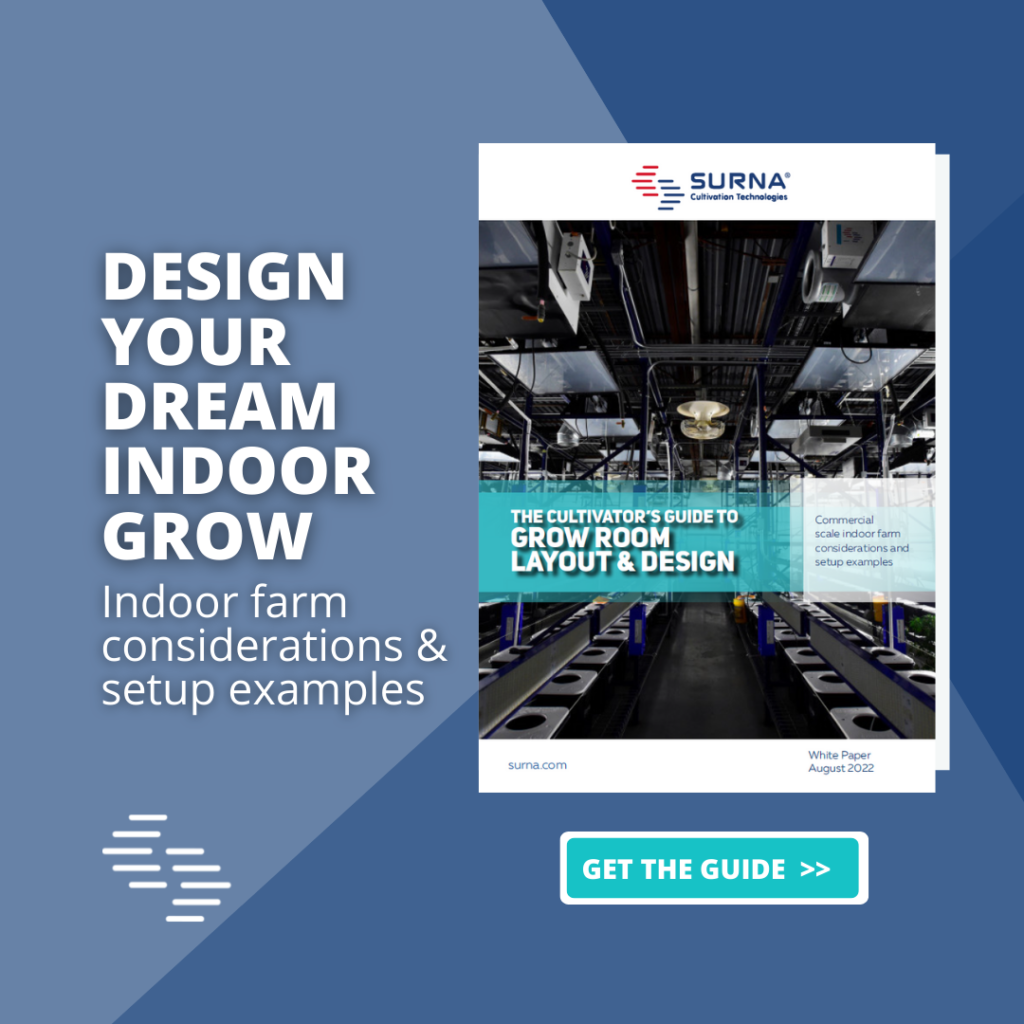
Surna Releases the Cultivator’s Guide to Grow Room Layout & Design

When it comes to designing your grow room layout, the possibilities can feel overwhelming. Where do you begin, and how will you make your design and equipment choices?

The Cultivator’s Guide to Grow Room Layout & Design

Time is money, and grow room layouts will have a direct effect on the quality of your crop, as well as the efficiency of your labor and overall operating costs. Surna has released this free educational resource for you to dive into the key components of a successful grow and to visualize which options make sense for your business.

Gain insight from engineering and design experts. Compare four example layout configurations modeled from a real commercial cultivation client. Find out how your layout might affect the canopy size, space utilization, architectural considerations, lighting requirements, HVACD design needs, and operations planning.

Download your free whitepaper today.
Surna WhitePaper

Helping Growers Bring Their Visions to Life

The success of your indoor farm will largely depend on the decisions you make before breaking ground. Surna Cultivation Technologies provides comprehensive indoor ag services and equipment to suit every unique grower’s needs.

With over 16-years of experience in controlled environment agriculture (CEA), Surna can guide you in creating the cultivation facility you’ve imagined, keeping your budget in mind. Streamline the planning and buildout process, then see your yields and profits grow!

As your one-stop-shop for equipment and services in CEA, Surna provides everything you need to get growing including architectural design, MEP engineering, HVAC systems, benching and racking, lighting, controls and automation, water treatment, and more! Find out how Surna can help bring your cultivation facility to life: watch now.


Meet Surna Cultivation Technologies In-Person at the 2023 Indoor Ag-Con

Are you planning to launch an indoor farm? Are you expanding or optimizing your existing facility? Surna invites you to stop by booth #807 at the 2023 Indoor Ag-Con located in Las Vegas, Nevada. An expert representative will be waiting to discuss your goals and begin evaluating which indoor ag solutions are the best fit for your needs.

Visit surna.com to learn more.

XtremeLUX and Triple Ring Technologies Announce Collaborative Solution to the Biggest Problems Hampering Indoor Ag

Advanced spectrally-controlled lighting and biotech will combine to push indoor agriculture past the goal of economic sustainability.


XtremeLUX, a designer and supplier of advanced lighting systems for indoor farming, and Triple Ring Technologies, a co-development firm that helps innovators and entrepreneurs develop science-based technologies for a broad range of markets, will introduce at the Indoor Ag-Con Conference on Feb 28 in Las Vegas, an advanced solution for optimizing energy usage and for helping growers to creatively solve their biggest biotechnical problems. The heart of the technology is the customization of spectral inputs to the particular species and lifecycle stage of the plant; dramatically reducing energy usage, improving yield and quality, and enabling industry-sustaining economic benefits. Extreme spectrum control and integrated sensors provide extra tools for attacking pathogens, repelling bugs, detecting malnourishment, and solving many other problems.

Silicon Valley-based Triple Ring Technologies, is pleased to support XtremeLUX, including the exhibition of their technology at Indoor Ag-Con. “Triple Ring is excited about the potential for the XtremeLUX system and advanced spectral control to support the scaling of vertical farming,” said Joe Weber, Vice President for Strategic Markets at Triple Ring. “Our experience developing technology and products involving photonics, sensors, and complex systems in a broad range of markets including in the ag tech world have positioned us well to support startups such as XtremeLUX.” he continued.

“XtremeLUX is very thrilled to be exhibiting our fourth generation of products at Indoor Ag-Con this year. As we grow our partnerships in the vertical farming space and advance our product line, we are looking forward to enhancing the role of CEA in global agriculture.” said Chiamin Cheng, CEO of XtremeLUX.

About XtremeLUX

Founded in 2011, XtremeLUX has developed an innovative system of controlled lighting for the vertical farming and cannabis industries.  Based on their adaptive spectrum control capability, their systems have been adopted to great benefit by large-scale leafy green and cannabis growers and by researchers. XtremeLUX’s open lighting control interface is designed to be interoperable with industry-standard communication protocols, including Modbus, MQTT, and USB-to-I2C, for easy integration with previously installed climate control, power management, fertigation, and other systems.

About Triple Ring Technologies

Triple Ring Technologies is a co-development company headquartered in Silicon Valley, with offices in Boston, Toronto, and Copenhagen. They partner with clients in medtech, life sciences, and sustainability & the environment to create new technologies, launch innovative projects, and start new ventures. Their capabilities span early R&D, product development, manufacturing, regulatory approval, market access, strategic investment, and incubation. For more information, please visit www.tripleringtech.com.

Contact for XtremeLUX:  Chiamin Cheng, chiamin.cheng@xtremelux.com.  Contact for Triple Ring Technologies:  Tracy Li, tli@tripleringtech.com.