Tag: packaging

Greenswell Growers

Plants First, People and Planet Always: Greenswell Growers CEO Carl Gupton on Scaling Sustainable Success

Greenswell Growers is showing what’s possible when automation, sustainability, and community commitment come together in one operation. With a 77,000-square-foot facility in Goochland County, Virginia, the company grows fresh, pesticide-free greens year-round while using up to 85% less water than conventional farming and reducing plastic with innovative packaging. As a speaker on the upcoming  Day 2 CEO Keynote Panel at CEA Summit East“Automation in Action: How Virginia Growers Are Putting Tech To Work” CEO Carl Gupton shared how a “plants first” philosophy drives every decision, from leveraging technology and scaling production to giving back to the local community.

Greenswell Growers is committed to “plants ” How does that philosophy guide your decisions when it comes to technology, sustainability, and operational practices?

When we commit to “plants first” everything else falls into place. At Greenswell Growers, the best way for us to take care of our customers, community, associates, and planet is to grow the most consistent, safest, best tasting and longest lasting greens possible. We focus on finding best-in-class processes and leveraging state-of-the-art equipment. From there, we have taken a few years to fine-tune the process, settings, and equipment to ensure the optimal growing environment.

Having a growing team of plant experts has also allowed us to give back to the community by supporting education programs at all levels. From providing tours to elementary classes, to guiding curriculum for technical school programs, and conducting research studies with universities, we help contribute to the future of the CEA space by enhancing education programs and inspiring bright, curious students.

Automation is a big part of your How has Greenswell Growers integrated automation into daily operations, and what benefits has it delivered in terms of efficiency, food safety and scalability?

When it comes to seeding, growing, harvesting, and packaging the greens, everything is automated! We are able to grow 30 times more per acre than traditional field farming greatly contributing to our overall efficiency. Our automation allows our greens to never be touched by human hands. This greatly reduces food safety risk while enhancing the quality and giving the greens their unique full texture and flavor. Automation, along with our rigorous food safety program, allows us to provide some of the best product on the market.

All this work didn’t happen overnight; we have spent the last few years fine-tuning our process to optimize our consistency and yields. With unwavering standards for growing the best greens possible along the way, we are now ready to continue to grow and scale the business.

You’ve built a strong identity around local impact and environmental How do your technologies and processes support your sustainability goals — especially when it comes to water use, packaging, and transportation?

The nature of this question is the basis of Greenswell Growers’ founding mission – to make a local impact by changing lives through the power of food. One of Greenswell Growers’ founders is the CEO of FeedMore – Central Virgina’s core hunger relief organization. He and two fellow stewards of the community, identified a need for fresh, safe produce in this region. In order to meet the growing and pressing need, the mission was to locally harvest greens that were reliably safe, and, of course, fresh and delicious. Since our first harvest in 2022, we have done just that and have continued to donate 5% of our yield to FeedMore to help nourish the community most in need.

In addition to donating greens, we also see it as our responsibility to take the best care of the planet for current and future generations. Our investment in technology and dedication to our process allow us to cut down on water, use less plastic, travel fewer miles, and reduce food waste.

Cutting back on what could become the most valuable resource, water, is just one way we are environmentally conscious. We use up to 85% less water than conventional farming due to our ability to precisely control the environment and accurately monitor the needs of our plants. Water is not the only resource we’re able to reduce. By investing in unique film-seal equipment, we also use 30% less plastic than traditional clamshells. Once the trays are sealed and case-packed, they are shipped throughout the Mid-Atlantic and neighboring regions cutting down miles traveled by trucks transporting greens from California and Arizona.

Finally, we believe it’s our responsibility to be part of the solution to one of the most pressing challenges in our food system: waste. According to the USDA, nearly 30–40% of the food supply is wasted in the United States. That’s billions of pounds of food—and the energy, water, and labor that went into growing it—lost each year. For us, reducing waste starts at the seed and continues through every stage of the process, from germination to harvest to how our greens are packed and delivered. On our website, we have a series of articles highlighting how our technology and process reduce food waste in our greenhouse, at store-level and in customers’ homes.

Greenswell Growers is “designed to scale,” with the ability to grow to order year- round. How does your model make that possible, and how does it help you meet customer demand more effectively?

By design, our growing schedule is not fully automated. Our team is dedicated to working directly with customers to ensure their product demands are met with the freshest greens. We often have customers visit and marvel that the greens they see being harvested show up in their location within a day or two. Along with our closely coordinated delivery schedules, with a 22-24 day growing cycle we are able to be nimble and make quick adjustments to meet customer demand.

Our model also allows us to grow greens with a naturally extended shelf life. Our process is ship right away to give even more time for stores to sell the product. This additional time makes it easier for the operator to order and meet their customers’ demand. Even beyond the store level, we hear frequently from chefs and customers “it never goes bad!”. Although they may be slightly exaggerating, we love knowing people no longer throwing out greens but instead, enjoying them. Growing the highest quality greens that last longer is a win for everyone involved.

Are there any upcoming plans, innovations or tech enhancements on the horizon for Greenswell Growers that you’re excited about?

Our years of finetuning our equipment, creating the optimal environment, and refining our process have paid off and we are now prime for the horizon. We are ready to take the next steps in helping to do our part and reshaping the food supply for the next generation.

Learn more about Greenswell Growers by visiting their website here.

Little Leaf Farms. PA

Little Leaf Farms’ CEO on Building an Indoor Ag Business

From AgFunderNews:    If you grocery shop in the Northeastern US, there’s a high chance you’ve come across Little Leaf Farms salad greens in the produce section. The 10-year-old company, which has built a “hands-free growing” system inside its greenhouses, now commands more than 50% of marketshare among indoor lettuce growers. Little Leaf greens grace the shelves of around 8,000 grocery stores in New England and the mid-Atlantic states.

The company’s success is a welcome story, given indoor agriculture’s recent past dotted with bankruptciesclosures, and troughs of disillusionment largely related to vertical farming startups.

Greenhouse operations haven’t been totally immune to the market correction, but Little Leaf Farms CEO and founder Paul Sellew has a simple explanation for why they haven’t flailed quite as badly.

“The sun is an amazing resource with all of these benefits. Any logical approach to growing a plant would include the sun.”

Still, Sellew is not one to gloat over corpses of other companies, preferring instead to keep his focus on Little Leaf Farms, growing plants and providing a consistent experience for customers.

Last month, the company announced its third greenhouse, which will operate out of Manchester, Tennessee and serve the Southeastern states, beginning in 2026.

AgFunderNews caught up with Sellew this week to discuss the company’s expansion, the role of tech in indoor agriculture, and why there may actually be a sustainability argument for plastic packaging.

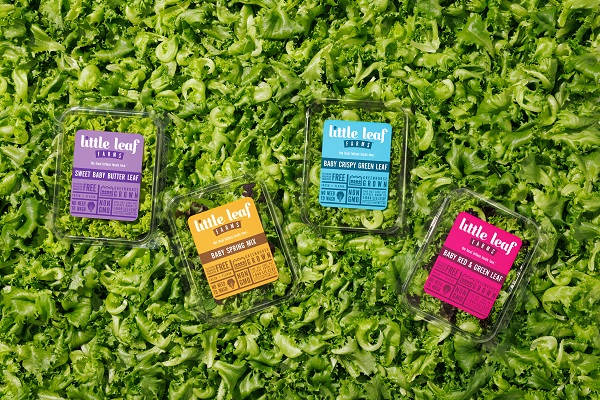
A selection of greens from Little Leaf Farms. Image credit: Little Leaf Farms

AgFunderNews (AFN): How has Little Leaf Farms weathered the ongoing tough times and kept making reliable products? 

Paul Sellew (PS): There’s this boring thing called day-to-day execution, and it’s quite essential if you’re going to build a successful CEA [controlled environment agriculture] company.

We operate seven days a week, 365 days a year, and we’ve organized the humans around the plants, not the other way around.

AFN: What do you mean by that last point?

PS: Plants grow every day. As a result, running a system—seeding, harvesting, etc.—has to be consistent with the rhythm of how the plants are responding, and we organize humans around that concept.

As a result, the greenhouse is more or less the same, whether it’s the middle of winter or the middle of summer. We just created this controlled environment where the plants are happily growing.

We’re also at a scale where a cold chain is followed, and we’ve got great people that know what they’re doing, which then leads to a consistent eating experience for the customer.

[This approach of “boring day-to-day execution] is not unique to Little Leaf Farms, although it’s amazing that it seems like a hard lesson to get for a lot of companies.

AFN: Do you think there’s an advantage of greenhouse growing over vertical farming?

PS: We’ve always believed that high-tech greenhouses were the solution and vertical farming was in search of a problem that didn’t exist.

The greenhouse industry was here beforehand. It’s here now, and it’ll be here in the future. There’s a very simple reason for this: the sun is a amazing resource with all of these benefits. Any logical approach to growing a plant would include this free resource.

The notion that vertical farming is higher technology [than greenhouses] is simply not true. The greenhouse industry is very sophisticated from a technology standpoint. Our facilities are fully automated, but when it comes down to growing plants, it never made sense to me that you would design a system around not using this free, amazing resource called the sun.

What’s been born out of this, unfortunately, is that many of these companies—not exclusively but predominately vertical farms—have gone bankrupt and failed.

There are other companies though. AppHarvest did not succeed as a company, but all those greenhouses [previously built by AppHarvest in Kentucky] are in operation today. You don’t see vertical farms that were shut down back in operation.

I think a lot of what we’ve seen here is this sort of arrogance around technology—what I’ll call the Silicon Valley mindset that says “agriculture is broken and we’re going to come in with our disrupter mindset.”

That didn’t work. A lot of these companies literally labeled themselves as tech companies when their business model was to sell leafy greens. To me, that was business model confusion.

 Read the full interview about Little Leaf Farms from AgFunder News ….

Innovating for Tomorrow: Good Natured Highlights Sustainable Packaging Trend


good natured Products Inc. (Indoor Ag-Con 2024 Booth #1323) has been making bio-based packaging since 2006 and has witnessed transformative changes in packaging expectations, driven by a deepening commitment to sustainability and a keen response to regulatory and consumer demands. The landscape is changing fast, and companies are trying to make sense of what’s best for their business and the environment. Sometimes, this complexity leads to confusion, and when people are confused, they might hesitate to act. Part of the company’s approach is to provide simplified, actionable insights to make it as easy as possible to make the switch to sustainable packaging.

Key trends to Watch:

  1. Brand Loyalty through Sustainability: Businesses are seeing sustainable packaging as more than an environmental choice—it’s a brand builder. With a significant majority of consumers favoring eco-conscious packaging, adopting recyclable, compostable, and reusable options is becoming a strategic priority for companies that want to stay ahead.
  2. Clarity is King: Transparent packaging isn’t just aesthetically pleasing; it’s a trust builder, offering consumers a clear view of the product, assuring them of its freshness and quality—a critical decision factor in today’s market.
  3. Navigating Regulatory Shifts: The dynamic regulatory environment demands agility and foresight. Collaborating with packaging experts can help businesses stay compliant and help avoid the pitfalls of investing in a packaging platform that may be at risk of regulation in the coming years.
  4. Focus on Freshness and Safety: A combination of materials, closures and design choices can have an impact on enhancing product longevity and safety, both of which are crucial in minimizing waste and boosting consumer confidence.
  5. Material Simplification: Optimizing materials for better recycling and composting is becoming a key topic to reducing environmental impact and promoting a circular economy in packaging. Although the EU has been moving faster on this front, similar approaches are expected to come to North America in the coming years.

As the agri-food sector evolves, so does its approach to sustainability, extending beyond packaging to encompass all aspects of operation, from water conservation to energy efficiency. Indoor Ag-Con provides a platform to explore these innovations, underscoring the industry’s commitment to sustainable practices.

We’re eager to engage with the forward-thinking community at Indoor Ag-Con, sharing insights and exploring sustainable packaging solutions that align with broader environmental goals,” remarks Paul Antoniadis, CEO of good natured®. “Sustainability is a journey, and every step, no matter how small, is part of our collective path toward environmental change, and from our experience your customers will reward your efforts.”

Visit good natured Products Inc. at Indoor Ag-Con to delve into these trends and discover how integrating sustainable packaging into your business can create value and a positive environmental impact.

Little Leaf Farms CEO Paul Sellew

Little Leaf Farms CEO: Navigating Sustainable Growth and Fresh Innovations

Join us for this month’s Q&A with Paul Sellew, the forward-thinking Founder & CEO of Little Leaf Farms, the largest U.S. greenhouse producer of hydroponic baby greens.   As the opening morning keynote speaker for the March 11-12, 2024 edition of Indoor Ag-Con, Paul sheds light on the challenges and opportunities of expanding Little Leaf Farms’ footprint, the eco-friendly practices that set it apart, and the company’s commitment to a farmer-first mindset.  From becoming the top-selling lettuce in New England to doubling production capacity with the recent expansion into McAdoo, PA, Sellew gives a glimpse into the company’s commitment to sustainable agriculture and its exciting plans for the future.

Given Little Leaf Farms’ recent milestone of becoming the #1 best-selling packaged lettuce in New England and the opening of a new greenhouse in McAdoo, PA, what challenges and opportunities do you foresee in expanding your footprint to new regions – and how does this contribute to your goal of reaching 100 acres under glass by 2026?
Little Leaf Farms.Packaging

When we opened our first greenhouse, we set out to build a more resilient food system and have pioneered a peri-urban approach in controlled environment agriculture. This means that our greenhouses are built in the surrounding regions of major urban centers to minimize the amount our leafy greens have to travel to reach the consumer, resulting in a lettuce that lasts longer and tastes better. We know this is the right model to enable us to bring our leafy greens to markets all over the country and are confident that once consumers in those new markets try our lettuce, they’ll never go back.

Little Leaf emphasizes sustainability. Can you highlight specific environmental practices that set the company apart and resonate with consumers?

Little Leaf Farms Indoor Ag-ContentEvery step of our growing process was designed to limit our impact on the planet. For example, we utilize captured rainwater in our soil-less farming, which results in 90% less water usage than field-grown greens. Plus our greenhouse locations are in regions with high natural precipitation and not dependent on groundwater as the west coast growers do.  . Our Devens, MA greenhouse gets 45 inches of rain per year alone and we use all of it, whereas Salinas, California sees only 10 inches of rain per year.
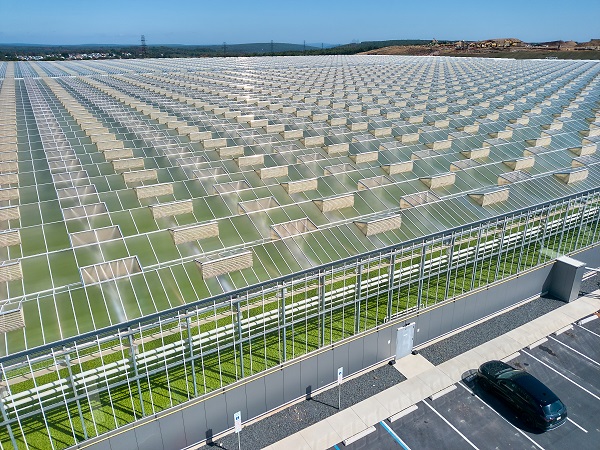
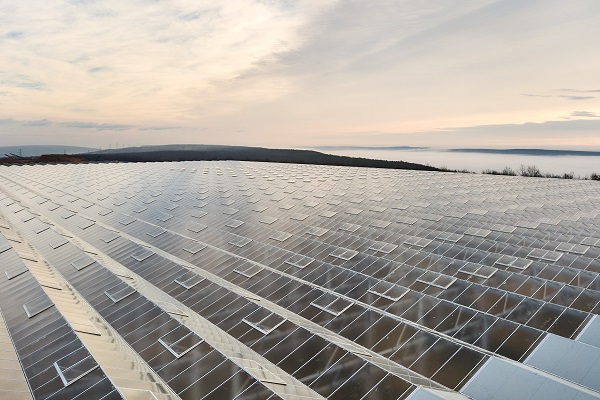
Our greenhouses are also built to maximize the free power of the sun, enabling us to grow our leafy greens with natural sunlight and solar-powered energy. We’re also using space much more efficiently and have 30 times more yield than conventional farms. In fact, 10 acres of our indoor greenhouse replaces 300 acres in a traditional farm. Our packages are just as important to our process, which is why they’re made from 100% post-consumer PET, which makes them infinitely recyclable and provides a much longer shelf life, too.

In a competitive market environment, what sets Little Leaf Farms apart, and how do you plan to maintain your leadership position as you expand to new markets?

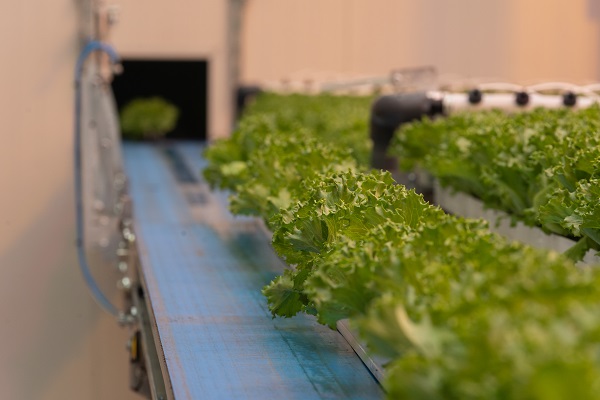
Little Leaf Farms.ProcessWe have always approached growing lettuce as a farming company, rather than a tech company. While we are technologists and our technology is cutting-edge, our priority is growing sustainable, local lettuce that most importantly, tastes great. Our lettuce arrives on grocery store shelves within 24 hours of harvesting, spending less time traveling than most other lettuces. This, in addition to our highly automated system and sustainable growing practices, results in fresh, flavorful leafy greens that remain crispy a remarkably long time after purchase. At the end of the day, we’re growing food. People want to buy and eat what tastes good, and our amazing taste is what’s going to continue to be the differentiator for us.  We’ve also grown our business in a way that gives us the ability to scale profitably and better service our retailers, which is going to continue to put us in a position to challenge and compete with field-grown brands as we enter new markets. We’ve surpassed field-grown greens in New England and I’m confident we can replicate that success in other markets across the country as we grow.
In discussing the company’s success, you’ve mentioned maintaining a “farming company” mindset rather than a “tech play” approach.  Can you elaborate on how this mindset influences decision-making, innovation, and the overall character of Little Leaf, especially considering the evolving landscape of technology in agriculture?

Little Leaf Farms. PAOur business is about farming, and we consider farming a people-based business that puts the crop first. This mindset enables us to recruit the best team of growers, R&D staff, operations staff, and more to carry out our mission of growing fresh leafy greens for all. The farmer-first mindset also reinforces our commitment to growing a product that tastes great and that people actually want to eat, which ties directly to our mission of bringing fresh, leafy greens for all.
What’s next for Little Leaf Farms?

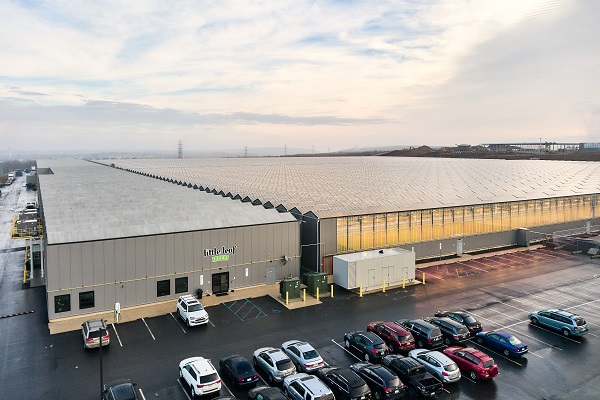
Our current focus is on getting our leafy greens to as many consumers as possible. Our recent expansion into McAdoo, PA has not only doubled our production capacity but has increased our retail presence to nearly 5,000 stores, expanding our footprint to include retailers in the Midwest and Southeast.

Little Leaf Farms.PA 2We’ve also expanded our product line to now offer salad kits made with our signature Baby Crispy Green Leaf lettuce, which had an initial launch in the Northeast this fall but will be expanding to our full distribution footprint in January 2024.
Learn more about Little Leaf Farms by visiting the website.  And, make plans now to join us for Indoor Ag-Con 2024 to hear Paul’s opening morning keynote address at 8 am on Monday, March 11, 2024!

good natured® Provides High-tech Growers with Plant-based Packaging to Maximize Positive Environmental Impact

good natured Products Inc. (the “Company” or “good natured®”) (TSX-V: GDNP), a North American leader in earth-friendly plant-based products and Indoor Ag-Con 2023 exhibitor (booth 228) continues to grow its market traction with fast-growing food producers who are taking a fresh approach to supplying plant-based, nutritional foods to communities across North America. A growing population, changing climate conditions and consumers’ desire to support local suppliers is creating opportunity for innovative food producers to introduce new crops and next-gen sustainable agriculture practices that are easier on the planet than some traditional growing methods.

One customer, Heron Farms in South Carolina, is turning sea level rise into sustainable agriculture, one delicious Sea Bean at a time. Heron Farms is North America’s premiere indoor saltwater vertical farm that grows salt-tolerant crops such as sea beans, sea pickles and sea asparagus using predictive software and cutting-edge automated data collection and analysis methods. At the forefront of sustainable farming practices, Heron Farms distributes to retail, restaurants, and food service industries throughout 14 US states.

“We’re on a mission to solve two of the 21st century’s largest environmental problems, rising sea water levels and excess carbon dioxide. We strategically chose plant-based packaging from good natured® as the best option to extend our brand values beyond the product we produce all the way through to the packaging itself,” explained Sam Norton, Founder and CEO of Heron Farms.

Meanwhile, ColdAcre in Whitehorse, Yukon is taking sustainable growing practices to the next level by providing year-round fresh food and growing solutions for far northern climates. ColdAcre provides wholesale and commercial fresh grown food in plant-based, certified compostable packaging from good natured®, which is distributed through small independent grocers through to large chains, such as Save-On-Foods in the Yukon. ColdAcre is the only year-round food producer of greens in the Yukon and sells their farming system across Canada and the Arctic. Their systems source local jobs, reduce supply chain dependency and bring high-quality fresh produce to communities making them more self-sufficient and sustainable.

Indoor Ag-Con 2023 Exhibitor Good Natured“We made it a mandate when we started ColdAcre that we wouldn’t contribute to the single-use plastics problem that’s top of mind for many Canadians. We’ve been very pleased to be able to work with our like-minded partner good natured® as we prepare to triple our production in the coming months and offer our products in plant-based, compostable packaging,” said Tarek Bos-Jabber, CEO of ColdAcre.

The good natured® corporate profile can be found at: investor.goodnaturedproducts.com

About good natured Products Inc.
good natured® is passionately pursuing its goal of becoming North America’s leading earth-friendly product company by offering the broadest assortment of eco-friendly options made from plants instead of petroleum. We’re all about making it easy and affordable for business owners and consumers to switch to better everyday products® made from renewable materials and free from chemicals of concern.

Part of the sustainable consumer goods market, good natured® offers over 400 products and services through wholesale and retail channels, including our own e-commerce stores. From plant-based home organization products to compostable food containers, bioplastic industrial supplies and medical packaging, we’re focused on delivering a great customer experience to make more plant-based products readily accessible to more people as the path to deliver meaningful environmental and social impact.

For more information: goodnaturedproducts.com